Instrumentation · Free online course
Industrial Instrumentation and Process Control
Free beginner instrumentation course: sensors, 4-20 mA loops, control valves, P&IDs and calibration. Learning is free; the certificate is optional and paid.
- 15 modules
- 8h 50m of video
- Beginner
- English
- ₹0, free

₹0Free for good
Worth ₹4,999 by length and depth against classroom training. It has always been free; that is not a former price.
No card. Checkout takes a minute and gives you a receipt.
Overview
About Industrial Instrumentation and Process Control
Free beginner instrumentation course: sensors, 4-20 mA loops, control valves, P&IDs and calibration. Learning is free; the certificate is optional and paid.
Industrial Instrumentation and Process Control is a free, self-paced online course from EDWartens for engineering students, ITI and diploma holders, and working engineers in instrumentation and process plants. It has 15 modules and 8h 50m of video lessons by Instrumentation Tools, Instrumentation Academy, Instrumentation Tools, with written notes and worked problems, a practical project with a document pack and a 15-question final assessment (pass mark 60%). Learning is free with an account; an optional certificate with a public verification code is issued when you pass. Last updated 27 September 2026.
Who it is for: Engineering students, ITI and diploma holders, and working engineers in instrumentation and process plants
This course includes
- 8h 50m of video lessons
- 15 modules with written notes and diagrams
- One final assessment: 15 questions, pass mark 60%
- Ask-an-engineer support from practising engineers
- Lifetime access, the course does not expire
- Optional verifiable certificate when you finish
- Step 1 of 3
Learn the 15 modules
8h 50m of video lessons, written notes and a practice task per module, at your own pace.
- Step 2 of 3
Pass the final assessment
15 questions drawn from every module, pass mark 60%, 3 attempts.
- Step 3 of 3
Take the certificate, if you want it
Optional, paid once, only if you choose it. The course stays free either way.
See the certificate and its price
A look inside


From the lessons
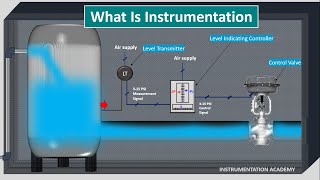
What Instrumentation and Control Is
by Instrumentation Academy
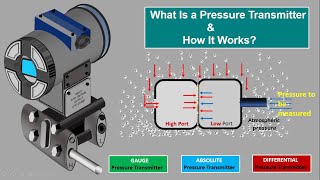
Pressure Transmitters, Switches and Impulse Lines
by Instrumentation Academy

Flow Measurement
by Instrumentation Academy

Switches and Proximity Sensors
by Instrumentation Academy

Percent and Process Variable Calculations
by Instrumentation Tools
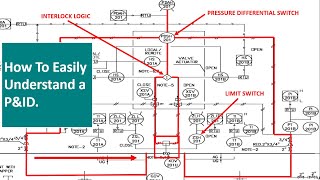
Reading P&IDs
by Instrumentation Academy
Lesson frames belong to the creators named in the Credits and are shown from YouTube.
What you learn
What you will be able to do
Explain instrumentation and control, describe the working principle of the common pressure, level, flow and temperature instruments, wire and read switches and proximity sensors, explain and calculate 4-20 mA loops both ways, describe control valves, actuators, positioners and I/P converters, read a P&ID, explain HART and Foundation Fieldbus, describe calibration and its records, and place every instrument in the PLC, DCS and SCADA loop.
- Tell open-loop from closed-loop and name every part of a control loop
- Explain absolute, gauge and differential pressure and the instruments that measure them
- Choose a level and a flow technology for a service and say why
- Read RTDs and thermocouples and check them with a meter
- Wire PNP and NPN sensors and limit switches to a PLC
- Calculate 4-20 mA to percent to process variable in both directions, including square-root flow
- Describe control valves, positioners, I/P converters and solenoid valves
- Read a P&ID, explain HART, describe calibration and follow a signal from field to screen
Syllabus
Course content, module by module
In order, at whatever pace suits you. Each module ends with a practice task that builds on the last.
- Modules
- 15
- Video lessons
- 86
- Of video
- 8h 50m
- Final questions
- 15
- 01
What Instrumentation and Control Is
2 lessons · 16m - 02
Pressure Measurement
6 lessons · 43m - 03
Pressure Transmitters, Switches and Impulse Lines
4 lessons · 22m - 04
Level Measurement
6 lessons · 16m - 05
Flow Measurement
10 lessons · 29m - 06
Temperature Measurement
3 lessons · 15m - 07
Switches and Proximity Sensors
10 lessons · 50m - 08
4-20 mA Loops and Transmitter Wiring
7 lessons · 45m Final assessment · 15 questions, pass mark 60%
Project
The course project
Optional practice that ends in the kind of job the course prepares you for, with the documents that go with it.
About 14 hours
Deaerator and feed-pump instrument package: from P&ID to signed loop check
Specify, schedule and document every instrument on a boiler feedwater deaerator and its two feed pumps: the P&ID tag and line schedule, a 24-row instrument index, ISA-20 datasheets for a DP flow transmitter and a wet-leg level transmitter, loop drawings, cable and junction-box schedules, a five-point calibration record and a loop check sheet with NAMUR fault tests. You deliver your own index, datasheets and loop check; the sample pack shows what an instrument engineer hands to a panel builder and a commissioning team.
Sample document pack, 9 documents, filled in for the scenario
- P&IDP&ID Tag and Line Schedule: Deaerator DA-101 and Feed Pumps P-101A/B
- Instrument indexInstrument Index: Deaerator DA-101 and Feed Pumps
- DatasheetInstrument Datasheet: FE-201 / FT-201 Feedwater Flow (Orifice and DP Transmitter)
- DatasheetInstrument Datasheet: LT-101 Deaerator Storage Level (DP Transmitter, Wet Leg)
- Loop drawingInstrument Loop Diagrams: LT-101 (sheet 1) and FT-201 (sheet 2)
- Cable scheduleInstrument Cable Schedule: Deaerator DA-101
- JB scheduleJunction Box Schedule: Deaerator DA-101
- Calibration recordCalibration Record: FT-201 Feedwater Flow Transmitter
- Loop checkLoop Check Sheet: LT-101 Deaerator Storage Level
Read inside the course and download as a workbook. The project is optional practice, marked when you submit it; the certificate needs only the modules and the final assessment.
About 16 hours
Water treatment chlorination and pH correction: analysers, magflow, control valve and dosing loops
Specify, document and prove the instruments of a drinking-water plant's flow control, chlorination and pH correction: a 25-row instrument index, datasheets for a DN400 magnetic flowmeter and a butterfly control valve with a HART positioner, loop drawings for an input-and-output flow loop and a dosing-pump loop, a cause and effect matrix, the dose arithmetic and tuning record, a two-point pH calibration with a chlorine analyser verification, and an output loop check that finds a valve out of calibration. The sample pack shows what an instrument engineer hands a water utility.
Sample document pack, 9 documents, filled in for the scenario
- P&IDP&ID Tag and Line Schedule: Flow Control, Chlorination and pH Correction
- Instrument indexInstrument Index: Flow Control, Chlorination and pH Correction
- DatasheetInstrument Datasheet: FIT-101 Raw Water Magnetic Flowmeter
- DatasheetInstrument Datasheet: FCV-101 Raw Water Flow Control Valve and Positioner
- Loop drawingInstrument Loop Diagrams: FIC-101 (sheet 1) and SC-310A Hypochlorite Pump (sheet 2)
- Cause & effectCause and Effect Matrix: Flow, Chlorination and pH Correction
- Loop tuning recordDose Calculation and Loop Tuning Record: FIC-101, AIC-311, AIC-321
- Calibration recordCalibration Record: AIT-321 Treated Water pH, with AIT-311 Chlorine Verification
- Loop checkLoop Check Sheet: FCV-101 Flow Control Valve (Output Loop)
Read inside the course and download as a workbook. The project is optional practice, marked when you submit it; the certificate needs only the modules and the final assessment.
Tools
Software, hardware and lessons
Software
None required.
Hardware
None required. A multimeter and any 4-20 mA transmitter or loop calibrator make the loop modules real.
Who it is for
Beginner. No prior instrumentation knowledge; basic electrical sense helps.
Video lessons by
- Instrumentation Tools
- Instrumentation Academy
Independent creators, credited in full under Credits.
Software you need
Nothing to install
What you walk away with
Your certificate for Industrial Instrumentation and Process Control
Finish the course, pass the final, and this is the document with your name on it.

Verifiable by anyone
Adds to LinkedIn in one click
QR code on the certificate
Names what you can do
A permanent link
Earned, not attended
Learning is free. The certificate is optional.
Add it now and pay only when you have finished the course, or come back for it later. One-off, US$23.99, with a receipt.
Issued by Wartens Ltd (England and Wales, company no. 15262249) through the EDWartens training portal, as a Certificate of Completion for this self-paced course. Sold in India by Wartens Automation Private Limited. It is not a vendor certification, a university award or a CPD-accredited activity, and it does not certify competence on live equipment. Delivered electronically; see the refund policy.
FAQ
Common questions
What is the HART protocol?
HART is a protocol that sends digital data over the same two wires as a 4-20 mA analog signal, so one instrument gives you both. The FieldComm Group, which maintains HART, says it provides two simultaneous communication channels, the 4-20 mA analog signal and a digital signal, and that the digital signal runs at 1200 bps without interrupting the 4-20 mA signal. The digital channel carries extra information such as device status and diagnostics. The course explains HART and smart transmitters alongside the 4-20 mA loop calculations.
Which standard defines the symbols on a P&ID?
The usual standard for instrument symbols and tag numbers on a P&ID is ISA-5.1, published by the International Society of Automation. ISA says the standard establishes a uniform means of depicting and identifying instrumentation and control functions, and its 2024 revision renamed it Instrumentation and Control Symbols and Identification. The course teaches you to read a P&ID, so you can recognise the tags and symbols on real drawings.
What does an instrumentation technician do, and what do they earn?
An instrumentation technician installs, calibrates, tests and repairs the instruments that measure and control a process. The US Bureau of Labor Statistics groups this work under electrical and electronic engineering technologists and technicians, whose duties include building, calibrating and repairing electrical instruments, and it gives their median annual wage as $78,190 in May 2025. BLS projects employment in that group to grow 2 percent from 2025 to 2035. Pay varies a lot by country and industry, so treat the US figure as a reference point only.
Do I need any equipment?
No. A multimeter and any 4-20 mA transmitter or a loop calibrator make the loop modules hands-on, but every practice task can be done on paper.
Is this for engineers or technicians?
Both. Technicians get the principles behind what they wire and calibrate; engineers get the field reality behind the P&ID. The calculations module is the one interviewers ask about.
Which industries does this apply to?
Oil and gas, power, chemicals, pharma, water, cement, food and any plant with a control room. The instruments and the 4-20 mA loop are the same everywhere.
Some source lessons are short animations. Is that enough?
The animations show the principle in two minutes, and the notes and practice tasks add the depth: ranges, wiring, failure modes and the calculations.
Is the Industrial Instrumentation and Process Control course really free?
Yes. Every module, practice task and assessment. You create an account so your progress is saved and the assessments can be marked. The certificate is the only paid item, and only if you want it.
What certificate do I get, and is it a vendor qualification?
An EDWartens Certificate of Completion, issued when you pass the final assessment, with a verification code anyone can check. It is not an ISA, vendor or government credential and is never described as one.
Who made the video lessons in the Industrial Instrumentation and Process Control course?
The creators named in the Credits block at the foot of this page, on their own YouTube channels. EDWartens did not make the videos and the creators are not affiliated with EDWartens. What EDWartens wrote is the study plan, the notes, the practice tasks and the assessments.
Is the Industrial Instrumentation and Process Control course free in India, and what does the certificate cost?
Yes. Learning costs ₹0 in India: every module, the written notes, the practice tasks and the final assessment, with no card and no trial period. The only paid item is the optional EDWartens Certificate of Completion, ₹499 including GST for this beginner course, paid in rupees through Razorpay, and only if you want it after passing the final assessment.
Is there classroom instrumentation training in India as well?
Yes. EDWartens India runs the Automation Engineer Program (AEP), a classroom programme at its Electronic City centre in Bangalore. The Automation Engineer Program (AEP) covers PLC, SCADA, HMI, drives, measuring instruments, PID basics and control panel design, taught in person at our Electronic City centre. This free course is separate and fully online; it is a good way to try the subject before deciding on classroom training. Details are at edwartens.co.in/automation-training-bangalore, and the programme itself at edwartens.co.in/courses/aep.
All course factsHide course facts
- Price
- ₹0, free for good. No trial, no card. Comparable classroom training of this length costs about ₹4,999.
- Who it is for
- Engineering students, ITI and diploma holders, and working engineers in instrumentation and process plants
- Format
- 15 self-paced modules, 8h 50m of video, written notes, a practice task per module and one final assessment.
- Level
- Beginner. Beginner. No prior instrumentation knowledge; basic electrical sense helps.
- Brand
- Vendor-neutral
- Software
- None required.
- Hardware
- None required. A multimeter and any 4-20 mA transmitter or loop calibrator make the loop modules real.
- Certificate
- Optional EDWartens Certificate of Completion, ₹499 inclusive of GST for learners in India, verifiable by code. Not a vendor credential.
- Video lessons by
- Instrumentation Tools, Instrumentation Academy, Instrumentation Tools (independent creators, credited below)
- Language
- English
- Last updated
- 27 September 2026
Pairs well with
 PLC programming · FreeSiemens TIA Portal
 PLC programming · FreeSiemens TIA Portal in Three Hours
 PLC programming · FreeTIA Portal: Build a Machine
 Instrumentation · FreeInstrumentation for PLC Engineers
More free courses: Free instrumentation and process control courses
Learning paths with this course
- Process control · 4 courses
- Control theory to the loop · 4 courses
Classroom course, Bangalore
Industrial automation course in Bangalore
The Automation Engineer Program (AEP) covers PLC, SCADA, HMI, drives, measuring instruments, PID basics and control panel design, taught in person at our Electronic City centre.
Credits
Who made the video lessons
The video lessons in this course were created by the people below, not by EDWartens. Every lesson streams from its creator's own YouTube channel; EDWartens neither hosts nor sells that footage, and the creators are not affiliated with EDWartens and do not endorse this course. What EDWartens wrote is the study plan, the notes, the practice tasks and the assessments.
- Instrumentation Toolsthe Instrumentation Tools principle, loop and calculation videos
- Instrumentation Academythe animated instrumentation lectures
- Instrumentation Toolsthe DCS course with HART protocol
If you are one of these creators and would like a lesson removed or credited differently, write to info@wartens.com.