Instrumentation · Free online course
Instrumentation for PLC Engineers
The half of the loop that is not code. Follow one measurement from the transmitter in the field, down the 4-20 mA loop, into the analog card, through NORM_X and SCALE_X into engineering units, out again to a valve, and back to the control room when the reading is wrong.
- 12 modules
- 6h 28m of video
- Intermediate
- English
- ₹0, free
- Lab practice in your browser

₹0Free for good
Worth ₹4,499 by length and depth against classroom training. It has always been free; that is not a former price.
No card. Checkout takes a minute and gives you a receipt.
Overview
About Instrumentation for PLC Engineers
Follow one measurement from transmitter to PLC and back to the valve, and learn to scale analog signals in TIA Portal.
Instrumentation for PLC Engineers is a free, self-paced online course from EDWartens for engineering students, ITI and diploma holders, and working engineers in instrumentation and process plants. It has 12 modules and 6h 28m of video lessons by Instrumentation Tools, Instrumentation Academy, Hegamurl, with written notes and worked problems, a practical project with a document pack and a 15-question final assessment (pass mark 60%). Learning is free with an account; an optional certificate with a public verification code is issued when you pass. Last updated 27 September 2026.
Who it is for: Engineering students, ITI and diploma holders, and working engineers in instrumentation and process plants
This course includes
- 6h 28m of video lessons
- 12 modules with written notes and diagrams
- One final assessment: 15 questions, pass mark 60%
- Ask-an-engineer support from practising engineers
- Lifetime access, the course does not expire
- Optional verifiable certificate when you finish
- Step 1 of 3
Learn the 12 modules
6h 28m of video lessons, written notes and a practice task per module, at your own pace.
- Step 2 of 3
Pass the final assessment
15 questions drawn from every module, pass mark 60%, 3 attempts.
- Step 3 of 3
Take the certificate, if you want it
Optional, paid once, only if you choose it. The course stays free either way.
See the certificate and its price
A look inside


From the lessons
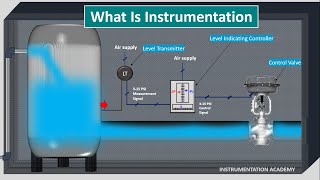
The Signal Path: Field Device to PLC to Valve
by Instrumentation Academy

Transmitters: What the Field Device Actually Sends
by Instrumentation Tools

The 4-20 mA Loop and How It Is Wired
by Instrumentation Academy

Percent, Milliamps and Process Variable
by Instrumentation Tools
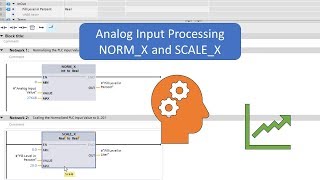
Into the PLC: Analog Cards, Raw Counts, NORM_X and SCALE_X
by Hegamurl

Out of the PLC: Unscaling, I/P Converters and Valves
by Hegamurl
Lesson frames belong to the creators named in the Credits and are shown from YouTube.
What you learn
What you will be able to do
By the end you will be able to:
- Trace a control loop end to end
- Wire two-, three- and four-wire transmitters and diagnose a loop from its current
- Scale an analog input with NORM_X and SCALE_X
- Build alarm levels with deadband
- Work back from a wrong HMI reading to the field fault
How it works
How this course works
Watch the lessons
Short video lessons, one module at a time, at your own pace.
Read the notes
Open the Reading tab for the written notes and diagrams of the module.
Practise in the 3D labOptional
Try the module in the free 3D lab, in your browser.
Check yourself
Answer the questions to see what stuck before you move on.
Final assessment
Pass the final once you have been through the modules.
Certificate, if you want oneOptional
Optional, with a page anyone can use to verify it.
Syllabus
Course content, module by module
In order, at whatever pace suits you. Each module ends with a practice task that builds on the last.
- Modules
- 12
- Video lessons
- 42
- Of video
- 6h 28m
- Final questions
- 15
- 01
The Signal Path: Field Device to PLC to Valve
3 lessons · 25m - 02
Transmitters: What the Field Device Actually Sends
4 lessons · 23m - 03
The 4-20 mA Loop and How It Is Wired, with lab practice:
5 lessons · 39m - 04
Percent, Milliamps and Process Variable
4 lessons · 43m - 05
Into the PLC: Analog Cards, Raw Counts, NORM_X and SCALE_X, with lab practice:
3 lessons · 49m - 06
Out of the PLC: Unscaling, I/P Converters and Valves
4 lessons · 35m - 07
Alarms, Interlocks and a Signal You Cannot Trust, with lab practice:
4 lessons · 39m - 08
Reading the Drawings: P&ID and the Loop Sheet, with lab practice:
3 lessons · 46m Final assessment · 15 questions, pass mark 60%
3D lab
Practise in the 3D lab
Check a 4 to 20 mA loop through to the PLC reading, build alarms and tune a level loop, the same jobs as the logic you write in TIA Portal.
- Read the P&IDProcess lab, about 20 minOpen in the lab (opens in a new tab): Read the P&ID
- Loop checkProcess lab, about 35 minOpen in the lab (opens in a new tab): Loop check
- Alarm rationalisationProcess lab, about 50 minOpen in the lab (opens in a new tab): Alarm rationalisation
- Tune the level loopProcess lab, about 45 minOpen in the lab (opens in a new tab): Tune the level loop
Optional. Skip it whenever you like: it never blocks your progress or your certificate.
Project
The course project
Optional practice that ends in the kind of job the course prepares you for, with the documents that go with it.
About 16 hours
Twelve instruments into an S7-1200: the RO plant loop by loop, from index to loop check
Wire, scale, alarm and test twelve field instruments on a 20 m³/h reverse-osmosis water plant. They are pressure, differential pressure and level on two-wire loops, magnetic flowmeters and analysers on four-wire loops, and a Pt100 on an RTD card. They also include float and pressure switches and a PNP proximity sensor on sinking inputs, and two 4-20 mA outputs to a VFD and a control valve. You deliver the TIA Portal project, your own instrument index, I/O list, loop check and FAT record. The sample pack shows what the integrator handed over.
- 8documents in the pack
- 9steps to follow
- Laboptional: in the 3D lab
- 5things to hand in
- 16 hof work, at your pace
Do it in the lab: 4 steps.
Sample document pack, 8 documents, filled in for the scenario
- Control narrativeControl Narrative: RO Plant RO-1
- Instrument indexInstrument Index: RO Plant RO-1
- I/O listI/O List: Panel CP-RO1
- Loop drawingInstrument Loop Diagrams: PT-102 (2-wire), FT-101 (4-wire), TT-101 (RTD)
- Cable scheduleInstrument and Control Cable Schedule: RO-1 Skid to Panel CP-RO1
- Calibration recordCalibration Record: PT-102 HP Pump Discharge Pressure Transmitter
- Loop checkLoop Check Sheets: CT-101 (4-wire) and TT-101 (RTD)
- FATFactory Acceptance Test Record: Panel CP-RO1
Read inside the course and download as a workbook. The project is optional practice, marked when you submit it; the certificate needs only the modules and the final assessment.
About 16 hours
Boiler deaerator on an S7-1200: wet-leg DP level, orifice flow, a thermocouple and two PID loops
Specify, wire, scale and tune the instrumentation of a boiler-house deaerator. It has a DP level transmitter with a wet leg on a pressurised vessel (negative calibrated range). It has an orifice-plate feedwater flow with square-root extraction done once and only once. It has a head-mounted temperature transmitter, a Type K thermocouple on a TC module, and low-low and high-high level switches. Two control valves are closed with PID_Compact on pressure and level. You deliver your own instrument index, range calculations, I/O list, tuning record, calibration record and loop check, plus the TIA Portal project.
- 11documents in the pack
- 7steps to follow
- Laboptional: in the 3D lab
- 6things to hand in
- 16 hof work, at your pace
Do it in the lab: 4 steps.
Sample document pack, 11 documents, filled in for the scenario
- Control narrativeMeasurement and Control Narrative: Deaerator DA-1
- Instrument indexInstrument Index: Deaerator DA-1
- DatasheetRange Calculation Sheet: LT-201 Wet-Leg Level and FT-202 Orifice Flow
- I/O listI/O List: Panel CP-DA1, S7-1214C
- Loop tuning recordLoop Tuning Record: PIC-204 and LIC-201
- Calibration recordCalibration Record: LT-201 Deaerator Level DP Transmitter
- Loop checkLoop Check Sheets: FT-202 Orifice Flow and LT-201 Wet-Leg Level
- Alarm listAlarm List: Deaerator DA-1
- Loop drawingLoop Diagrams: LT-201 (2-wire with Wet Leg), TT-205 (Thermocouple) and LCV-201 (Output with High-High Override)
- Cause & effectCause and Effect Matrix: Deaerator DA-1
- O&M manualOperator and Technician Notes: Deaerator DA-1
Read inside the course and download as a workbook. The project is optional practice, marked when you submit it; the certificate needs only the modules and the final assessment.
Tools
Software, hardware and lessons
Software
TIA Portal V17+ (21-day trial) with S7-PLCSIM for the scaling, alarm and PID exercises. The instrumentation modules need nothing installed.
Hardware
None. A multimeter and a loop calibrator are useful if you have them, and every exercise is written to work without them.
Who it is for
Intermediate. You can write ladder logic in TIA Portal and have met analog inputs. No instrumentation background assumed, and no maths beyond a straight line.
Video lessons by
- Instrumentation Tools
- Instrumentation Academy
- Hegamurl
Independent creators, credited in full under Credits.
Software you need
What to download, where from, what it costs and how to install it. Every link goes to the maker's own site, never a mirror.
The instrumentation modules need nothing installed. TIA Portal is for the scaling, alarm and PID exercises.
Required
- 01Free trial: 21 days
SIMATIC STEP 7 Professional and WinCC (TIA Portal) V21 Trial
Siemens
- Runs on
- Windows 11 Pro or Enterprise 64-bit (24H2), Windows 10 Enterprise 2021 LTSC, or Windows Server 2022/2025. Windows 11 Home is supported only for the Basic editions.
- Account
- A free Siemens account registered for Industry Online Support (SiePortal)
- Size
- about 8.1 GB for the main ISO, plus an optional 3.1 GB DVD 2 with hardware support packages
Siemens lets registered users download the V21 trial of STEP 7 (Basic and Professional), STEP 7 Safety and WinCC and test it for 21 days. The same package is used for the full product; after 21 days you need a purchased licence to keep working.
Steps
- 1.Open the Siemens trial page (entry 109989774) and sign in with your Siemens Industry Online Support account.
- 2.Download TIA_Portal_STEP7_Safety_WinCC_V21.iso (8.1 GB).
- 3.Download S7-PLCSIM_V21.iso (2.5 GB) from the same page: PLCSIM is a separate download.
- 4.Right-click each ISO, choose Mount, and run Start.exe as administrator. Install STEP 7 and WinCC first, then PLCSIM.
- 5.Follow the setup, accept the licence terms and restart the PC when asked.
- 6.Open TIA Portal V21 and create a new project to confirm it runs.
- Install from a local drive with plenty of free space; Siemens lists 20 GB free as the minimum and the ISOs alone are over 10 GB.
- You only need DVD 2 if you want extra hardware support packages.
- If you cannot install locally, Siemens also offers a 21-day TIA Portal Cloud trial in the browser (one-hour sessions, not in every country).
Official download pagesupport.industry.siemens.comAlternatives
- TIA Portal Cloud trial: 21 days free in a cloud virtual machine, no install. Sessions are limited to one hour and it is not available in every country.
- 02Free trial: 21 days
S7-PLCSIM V21 (TIA Portal) Trial
Siemens
- Runs on
- Windows 11 Pro or Enterprise 64-bit (24H2), Windows 10 Enterprise 2021 LTSC, or Windows Server 2022/2025. Windows 11 Home is supported only for the Basic editions.
- Account
- A free Siemens account registered for Industry Online Support (SiePortal)
- Size
- about 2.5 GB (ISO)
S7-PLCSIM V21 is offered as a 21-day trial on the same Siemens page as the STEP 7 and WinCC V21 trial. It needs STEP 7 V21 installed on the same PC.
Steps
- 1.Open the Siemens STEP 7 and WinCC V21 trial page (entry 109989774) and sign in.
- 2.Install STEP 7 V21 from the main TIA Portal ISO first.
- 3.Download S7-PLCSIM_V21.iso (2.5 GB) from the section Download S7-PLCSIM Standard V21.
- 4.Mount the ISO, run Start.exe as administrator and follow the setup.
- 5.In TIA Portal, select your CPU and click Start simulation to open PLCSIM.
- Siemens notes that the PLCSIM Standard V21 installation also includes S7-PLCSIM Advanced V8.0.
Official download pagesupport.industry.siemens.com
Checked against each maker's own page on 27 September 2026. Trial lengths and editions change; the maker's page is the final word.
What you walk away with
Your certificate for Instrumentation for PLC Engineers
Finish the course, pass the final, and this is the document with your name on it.

Verifiable by anyone
Adds to LinkedIn in one click
QR code on the certificate
Names what you can do
A permanent link
Earned, not attended
Learning is free. The certificate is optional.
Add it now and pay only when you have finished the course, or come back for it later. One-off, US$28.99, with a receipt.
Issued by Wartens Ltd (England and Wales, company no. 15262249) through the EDWartens training portal, as a Certificate of Completion for this self-paced course. Sold in India by Wartens Automation Private Limited. It is not a vendor certification, a university award or a CPD-accredited activity, and it does not certify competence on live equipment. Delivered electronically; see the refund policy.
Practise what you learn in the free 3D lab
Technical work is judged on what you can do: wiring, commissioning, finding a fault. Doing a task yourself teaches more than watching it a second time, and a lab lets you try it safely before you meet real equipment. It does not replace working on real hardware.
- Practise safely, so a mistake costs nothing.
- The lab checks your work like a site test, so you know when it is right.
- Free, in your browser, with nothing to install.
Why learn with EDWartens
What you get with this course.
- Free from the first lesson to the final assessment.
- Practice in a free 3D lab in your browser, with nothing to install.
- Video lessons with written notes and a project.
- An optional certificate that anyone can verify online.
FAQ
Common questions
Is this an instrumentation course or a PLC course?
It is the join between them, written for the PLC side. There is a full Industrial Instrumentation course in this catalogue that covers pressure, level, flow and temperature measurement in depth, and this course does not repeat it. What this one does is follow one signal all the way through: what the transmitter sends, how the loop carries it, what the analog card turns it into, how you scale it, how you alarm on it, how it gets back out to a valve, and how you find the fault when the number is wrong.
I have never touched an instrument. Can I follow it?
Yes. Nothing about instrumentation is assumed, and the arithmetic is done in full every time rather than left as a formula. What is assumed is the programming side: you can write ladder logic in TIA Portal and you have seen an analog input before. If you have not, do the Siemens TIA Portal course first.
Do I need a multimeter, a loop calibrator or a real transmitter?
No. They help if you have them and the course points out where, but every exercise is written to be done with S7-PLCSIM and forced values instead. The scaling, alarm and PID work is all provable in simulation.
Do I need to buy TIA Portal?
No. Siemens publishes a free 21-day trial with S7-PLCSIM included, and it needs only a free Siemens account. Modules 1 to 4 need no software at all, so install it when you reach module 5.
Does it cover HART and fieldbus?
It covers what a PLC engineer meets: that HART rides on the same two wires as the 4-20 mA signal, what it lets somebody change in the field without telling you, and why that matters to your scaling. Configuring HART devices and designing fieldbus segments is instrument engineering and is not in this course.
Is the Instrumentation for PLC Engineers course really free?
Yes. Every module, every practice task and the final assessment. You create an account so your progress is saved and the assessments can be marked. The only paid item is the certificate, and only if you decide you want it.
What certificate does the Instrumentation for PLC Engineers course give?
An EDWartens Certificate of Completion, issued when you have worked through every module and passed the final assessment, with a unique number anyone can verify on our site. It is not a vendor credential and we will never describe it as one.
Do I have to use the lab?
No. The lab is optional practice. You can skip it whenever you like, and it never blocks your progress, the final assessment or your certificate.
Is the lab free?
Yes. Every lab level for this course opens in your browser, free, with nothing to install.
Is the Instrumentation for PLC Engineers course free in India, and what does the certificate cost?
Yes. Learning costs ₹0 in India: every module, the written notes, the practice tasks and the final assessment, with no card and no trial period. The only paid item is the optional EDWartens Certificate of Completion, ₹599 including GST for this intermediate course, paid in rupees through Razorpay, and only if you want it after passing the final assessment.
Is there classroom instrumentation training in India as well?
Yes. EDWartens India runs the Automation Engineer Program (AEP), a classroom programme at its Electronic City centre in Bangalore. The Automation Engineer Program (AEP) covers PLC, SCADA, HMI, drives, measuring instruments, PID basics and control panel design, taught in person at our Electronic City centre. This free course is separate and fully online; it is a good way to try the subject before deciding on classroom training. Details are at edwartens.co.in/automation-training-bangalore, and the programme itself at edwartens.co.in/courses/aep.
All course factsHide course facts
- Price
- ₹0, free for good. No trial, no card. Comparable classroom training of this length costs about ₹4,499.
- Who it is for
- Engineering students, ITI and diploma holders, and working engineers in instrumentation and process plants
- Format
- 12 self-paced modules, 6h 28m of video, written notes, a practice task per module and one final assessment.
- Level
- Intermediate. Intermediate. You can write ladder logic in TIA Portal and have met analog inputs. No instrumentation background assumed, and no maths beyond a straight line.
- Brand
- Vendor-neutral
- Software
- TIA Portal V17+ (21-day trial) with S7-PLCSIM for the scaling, alarm and PID exercises. The instrumentation modules need nothing installed.
- Hardware
- None. A multimeter and a loop calibrator are useful if you have them, and every exercise is written to work without them.
- Certificate
- Optional EDWartens Certificate of Completion, ₹599 inclusive of GST for learners in India, verifiable by code. Not a vendor credential.
- Video lessons by
- Instrumentation Tools, Instrumentation Academy, Hegamurl (independent creators, credited below)
- Language
- English
- Last updated
- 27 September 2026
Pairs well with
 PLC programming · FreeSiemens TIA Portal
 PLC programming · FreeSiemens TIA Portal in Three Hours
 PLC programming · FreeTIA Portal: Build a Machine
 Cybersecurity · FreeOT Security Assessment: Testing a Plant Without Stopping It
More free courses: Free instrumentation and process control courses
Classroom course, Bangalore
Industrial automation course in Bangalore
The Automation Engineer Program (AEP) covers PLC, SCADA, HMI, drives, measuring instruments, PID basics and control panel design, taught in person at our Electronic City centre.
Credits
Who made the video lessons
The video lessons in this course were created by the people below, not by EDWartens. Every lesson streams from its creator's own YouTube channel; EDWartens neither hosts nor sells that footage, and the creators are not affiliated with EDWartens and do not endorse this course. What EDWartens wrote is the study plan, the notes, the practice tasks and the assessments.
- Instrumentation Toolsthe 4-20 mA loop, transmitter wiring, the percent and process variable calculations, control valves, P&ID reading, calibration and the loop in a PLC or DCS
- Instrumentation Academythe animated fundamentals: what instrumentation is, pressure transmitters, why 4-20 mA, proximity sensors, I/P converters, positioners and P&ID drawings
- Hegamurlanalog processing in TIA Portal: NORM_X and SCALE_X, output unscaling, and PID_Compact with its tuning
If you are one of these creators and would like a lesson removed or credited differently, write to info@wartens.com.