
Classroom · Bangalore
Automation Engineer Program (AEP), Bangalore
Become an automation engineer, trained on real panels in Bangalore
The Automation Engineer Program (AEP) is our classroom programme in PLC, SCADA, HMI and drives at Electronic City, Bangalore: 3 to 12 months long, for ₹71,000 + GST, bought online with your batch or paid in instalments.
- Duration
- 3 to 12 months
- Mode
- Classroom, Bangalore
- Fee
- ₹71,000 + GST
Secure payment by UPI, card or net banking. 18% GST added at checkout, receipt by email.


Why this course
Everything you need to start a career in automation
A job guarantee in writing
Placed within the nine months after you complete the programme, or the programme fee you paid back. Conditions apply.
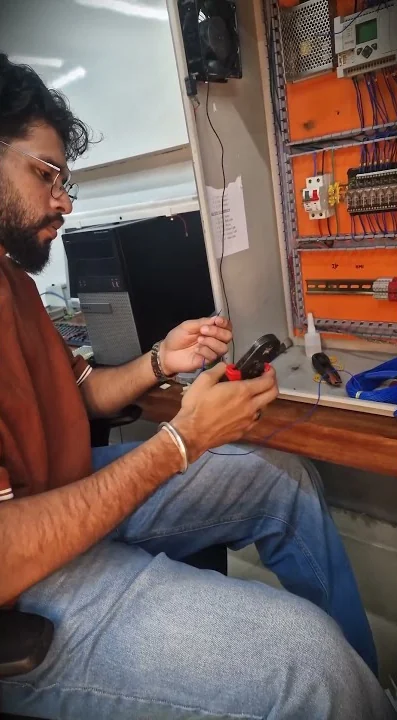
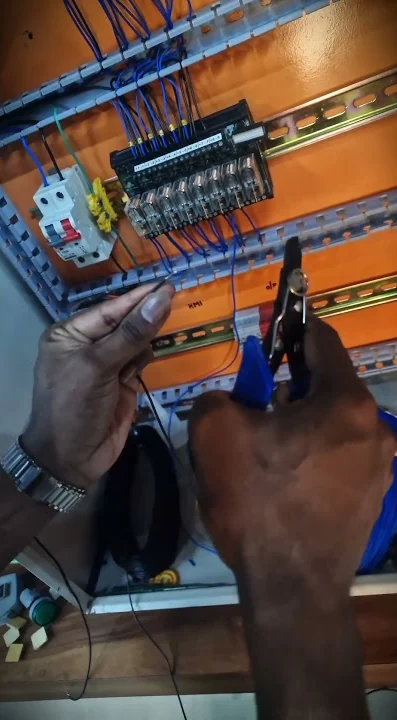
Real panels in our Bangalore lab
20 PLC brands and 5 SCADA systems, on wired panels at our Electronic City centre.
Practise again in a 3D lab
45 of the 67 class days have a lab task.
18 Indian job simulations
A working week at an Indian company, on your screen, before your first interview.
Six one-to-one career sessions
2 resume reviews, 2 mock technical interviews and 2 mock HR interviews.
A certificate employers can check
The AEP certificate and a Wartens experience certificate, which any employer can verify online.
How the course works
Five steps from day one to your first job
- 1
Learn in class
67 classroom sessions at Electronic City, phase by phase, with an AI tutor in every lesson.
- 2
Practise in the lab
On the centre's wired panels in class, and again in the free 3D lab at home.
- 3
Build the projects
Project work as a junior engineer on Wartens automation projects.
- 4
Get certified
Pass every phase gate and the final; the certificate issues automatically.
- 5
Get job support in India
CV and mock interviews, then interviews arranged by the placement team.

The 3D lab · free, in your browser
See the 3D lab you practise in
Real machines, panels and PLCs, drawn in 3D and running in your browser. This is how a task runs, start to finish.

- 1Open the taskRead the brief and the I/O list: what the machine must do, and every input and output.
 2Build itWire the panel, or write the ladder program, in your browser.
- 3Run it on the 3D machinePress Start and watch the pump, conveyor or fan answer your program.
 4Find the faultTrace a fault with the multimeter and the drawings, as an engineer does on site.
 5Pass the acceptance testRun the factory acceptance test: every line must pass before you sign off.
Swipe for all 5 steps.
Practise at home, as often as you like
Every level opens in the browser: free, nothing to install, on a laptop or a phone.
Make mistakes safely
Wire it wrong, trip it, start again. Nothing breaks and nobody gets hurt.
Show the result in interviews
Talk an interviewer through a machine you programmed, tested and passed.
The labs on this course
45 of the 67 class days have an optional lab task, across 34 levels in seven labs. Extra practice beside the panel work in class: it never takes its place.
- PLC lab
- Electrical lab
- Process lab
- Substation and MCC lab
- OT security lab
- Robotics lab
- AI Workbench
Try a level now, free
- Motor start/stop with overloadPLC lab(opens in a new tab)
- Batch counter on a packing linePLC lab(opens in a new tab)
- Commission the star-delta fan starterElectrical lab(opens in a new tab)
Nothing to install and no account needed. Optional: it never blocks a lesson or affects your certificate.
Job simulations · included
Work a week at an Indian company, before your first interview
A job simulation is a working week at a company, on your screen: a desk with email, chat and documents, the workplace in 3D, and colleagues who give you real tasks. Here is the PLC Programmer week at Indrayani Controls.

- 1Arrive at the workplaceIndrayani Controls, a systems integrator in Chakan, Pune, building PET bottling line 2 for a beverage plant.
 2Read the morning email and ticketsThe day's work arrives by email, tickets and permits; ask a colleague when you are stuck.
 3Do the workWrite the I/O list, program a bottling line, run the factory acceptance test and handle a change request.
 4Follow the site's safety rulesRead the site rules, then work to them: India's own rules and standards (CEA 2023, IS/IEC, 415 V supplies, FSSAI).
 5Get a debriefAfter each shift, a debrief on what you did well and what to change.
Swipe for all 5 steps.
Stories for your interviews
Tell an interviewer about the work you planned, the calls you made and what you handed in.
Confidence on day one
Emails, tickets, permits and deadlines will not be new on your first morning at work.
The Indian workplace
Indian companies, cities, standards and rupees, as you will meet them.
18 simulations on this course

Maintenance Electrical Engineer
The in-house maintenance team of a biscuit plant in an industrial estate near Pune
Work orders, safe isolation under a permit, fault finding and a root-cause report.
Best after Phase 1 (basic engineering)

Control Panel Design Engineer
Noyyal Controls, a panel design and build shop in Coimbatore, on a case packer panel
GA drawing, schematics, BOM, a heat calculation for a 45 °C panel room and the routine test.
Best after Phase 1 (panel design)

PLC Programmer
Indrayani Controls, a systems integrator in Chakan, Pune, building PET bottling line 2 for a beverage plant
Write the I/O list, program a bottling line, run the factory acceptance test and handle a change request.
Best after Phase 2 (Siemens)

SCADA and HMI Engineer
Arkavathy Systems, a SCADA integrator in Peenya, Bengaluru, on a town's water treatment plant
Build the tag list, alarm list and operator screens for a running water treatment plant.
Best after Phase 2 (Siemens HMI and SCADA)

Commissioning Engineer
Palar Commissioning Services in Sriperumbudur, commissioning a dairy's milk reception skid
Loop checks, I/O checkout, the site acceptance test and a punch list on a plant that is nearly ready.
Best after Phase 4 (multi-platform)

Electrical Design Engineer
Ponnaiyar Power Design, a design consultancy in Guindy, Chennai, for a creamery's utilities block in Madurai
Size cables and protection for a utilities block at 45 °C, draw the single-line diagram and handle a late design change.
Best after Phase 1 (panel design)

Maintenance Technician
The maintenance team of Hagari Polymers, a moulding hall with eight injection machines in IMT Manesar, Haryana
A first month in a moulding plant: safe isolation with a buddy, first planned maintenance rounds and a heater fault.
Best after Phase 1 (basic engineering)

Multi-skilled Maintenance Engineer
The engineering department of Hemavathi Kitchens, a ready-meals plant in the Harohalli industrial area, Bengaluru
Mixed electrical and mechanical faults on a chilled ready-meals line, safe isolation, planned maintenance in a CMMS and a reliability plan.
Best after Phase 1 (basic engineering)

Mechanical Maintenance Engineer
The maintenance department of Ghod Board and Packaging, a converting hall in Waluj MIDC, Chhatrapati Sambhajinagar
Vibration and alignment checks, hydraulics, a lifting plan, spares and the root cause of a bearing failure.
Best after Phase 1, if you want the mechanical side

Instrumentation Engineer
Vishwamitri Automation, an instrumentation contractor in Vadodara, at a solvent plant in Ankleshwar GIDC
Instrument index, datasheets, loop diagrams and calibration for a solvent blend tank in a hazardous area.
Best after Phase 2

Robotics Engineer
Kollidam Automation, a robot integrator in Ambattur, Chennai, on a packaging plant's palletising cell in Oragadam
Risk-assess, guard, program and hand over a palletising robot cell: light curtain, robot handshake and tests.
Best after Phase 4 (multi-platform)

OT Security Analyst
Kukadi Controls Security, an OT security firm in Hinjewadi, Pune, for a dairy plant in Baramati MIDC
Asset inventory, zones and conduits, and a remote-access incident at a plant, without touching live equipment.
Best after Phase 4 (multi-platform)

Substation and MCC Engineer
Pawana Panelworks, a panel builder and site testing contractor in Bhosari, Pune, at a glass works' new 11 kV substation in Taloja MIDC
Protection settings, relay tests and an inrush trip when energising a new feeder.
Best after Phase 4 (multi-platform)

Solar PV and EV Charging Engineer
Sharavathi Energy Installations, an installer in Bommasandra, Bengaluru, for a logistics hub in Hoskote
Size a rooftop PV array, test it before energising and fit EV chargers on a limited supply.
Best after Phase 4, as a wider view of the energy side

Data Centre Critical Facilities Engineer
Ulhas Data Services, a facilities operator in Mahape MIDC, Navi Mumbai, running a data hall on its campus
Method statements, change control and a UPS event in a live data hall; power, cooling and capacity.
Best after Phase 4, as a wider view of facilities work

Building Services Multi-skilled Engineer
Nira Building Services, a facilities contractor in Pune, for an office tower and an outpatient clinic
Planned maintenance, building management alarms, water safety, fire alarm tests and a 12-month compliance calendar.
Best after Phase 4, as a wider view of facilities work

Quality Engineer
Dudhna Precision Components, a brass-parts maker in Jamnagar, with a customer's battery junction line in Chakan, Pune
A customer complaint with 24-hour containment, 8D, a gauge study, PFMEA and process control charts.
Best after Phase 4, for the quality side of a plant

Engineering Project Coordinator
Vatrak Controls, a controls contractor in Sanand, Ahmedabad, on a 33/11 kV primary substation project at Changodar
Keep a RAID log, write the status report, run the document register and manage a late vendor, with costs in rupees.
Best after Phase 4, for the project side of automation work
You open them from your student portal, on sim.edwartens.com, from the day you enrol. Finish one with a score of 60 or more for a Certificate of Completion (Job Simulation). Optional practice: the companies are fictional, the places and the rules are real.
Career support · jobs in India
From your CV to your first job in India
Six one-to-one sessions with the placement team, booked from your student portal, then interviews with hiring companies.

Two CV reviews
30 minutes each, one to one, online. You can book them once you pass Phase 3 (Allen-Bradley).

Two technical mock interviews
45 minutes each, one to one, online. You can book them once you reach Phase 5, interview preparation.

Two HR mock interviews
30 minutes each, one to one, online. You can book them once you reach Phase 5, interview preparation.
Job guarantee, or your programme fee back. Conditions apply.
Job support is for jobs in India.
Conditions apply. To stay eligible:
- Complete every phase of the programme.
- Keep the minimum attendance in the Terms and Conditions.
- Pass the assessments.
- Attend every interview arranged for you (missing two or more without telling us ends the guarantee).
- Reply to your placement officer within 48 hours.
- Do not decline a suitable offer: a role in industrial automation paying at least ₹15,000 a month, and not below the applicable minimum wage, anywhere in India.
- Ask for the refund in writing within 30 days of the nine months ending.
What automation engineers earn

In India, where our job support is
India
- Starting, 0 to 2 years
- ₹2.5 to 4 L
- Experienced, 5+ years
- ₹12 to 24 L
₹ per year. Where almost every graduate starts. Pay climbs steeply once you have commissioned real plant.
Salaries abroad: where the skills are paid more
Career outlook for later, with experience. Our job support is for jobs in India.

Gulf (UAE, Saudi, Qatar)
- Starting, 0 to 2 years
- AED 95 to 145 K
- Experienced, 5+ years
- AED 230 to 310 K
AED per year, tax-free
The usual first move abroad, and income is tax-free. Most roles ask for 3 to 5 years' experience first.

Europe
- Starting, 0 to 2 years
- €45 to 57 K
- Experienced, 5+ years
- €62 to 85 K
€ per year
Germany and the Netherlands pay the most. Needs a work permit, and often some German.

United Kingdom
- Starting, 0 to 2 years
- £30 to 38 K
- Experienced, 5+ years
- £45 to 60 K
£ per year
Steady demand in food, pharma and water. Needs a sponsored work visa.

United States
- Starting, 0 to 2 years
- $70 to 90 K
- Experienced, 5+ years
- $107 to 161 K
$ per year
The highest figures, and the hardest to reach: it needs sponsorship, and living costs take a large share.
Automation Engineer, gross pay a year before tax. Market data, not EDWartens placement figures: ranges published for the role by Talent Vertex Partners (India automation survey, June 2026), PayScale, Glassdoor, Indeed, ZipRecruiter, ERI SalaryExpert, and the EDWartens UAE salary guide for Gulf bands. Updated August 2026. What you are offered depends on your skills, your experience, the employer and the city. Estimate your own salary.
What you learn
The AEP syllabus, phase by phase
7 phases: 67 classroom sessions in phases 0 to 5, each closed by a gate or an exam, then placement and project work. Open a phase to see its sessions.
Phase 0Foundation7 classroom sessions
Engineering physics, electrical fundamentals, single and three phase power, load and cable sizing basics, measuring instruments and electrical safety, automation fundamentals, PLC core concepts (scan time, inputs and outputs)
- D1Engineering physics
- D2Electrical fundamentals
- D3Power systems
- D4Power calculation and load analysis
- D5Measuring instruments
- D6Automation fundamentals: PLC, HMI and SCADA; communication protocols; PLC vs SCADA
- D7PLC core concepts
Ends with: Evaluation gate 0
Phase 1Basic Engineering4 classroom sessions
Engineering drawing and symbols, control panel layout, star-delta and DOL starter logic and wiring, VFD basics and parameter setting, Industry 4.0 concepts
- D8Engineering drawing and design
- D9Panel design
- D10Control logic and wiring
- D11Drives and Industry 4.0
Ends with: Evaluation gate 1: a practical panel drawing and starter circuit wiring
Phase 2Siemens in depth19 classroom sessions
TIA Portal projects; bit logic, edges, timers, counters, comparators, maths, move and conversion; program control; analog inputs and PID introduction; Siemens HMI; WinCC SCADA; SINAMICS VFD integration; SIMATIC Manager (S7-300) with PLCSIM
- D12Siemens TIA Portal introduction
- D13Bit logic I
- D14Bit logic II
- D15Signal edges
- D16Timers
- D17Counters
- D18Comparators
- D19Math operations
- D20Move operations I
- D21Move operations II
- D22Conversion operations
- D23Program control and shift
- D24Analog and PID introduction
- D25Siemens HMI I: HMI device and IP configuration, communication, screens and navigation
- D26Siemens HMI II: Pop-up and global screens, alarm view, trends, user administration
- D27Siemens SCADA (WinCC) I: SCADA configuration, communication, objects, screens and navigation
- D28Siemens SCADA (WinCC) II: Alarms, trends, user administration, data acquisition, reporting
- D29SINAMICS VFD: Parameters, commissioning and PLC to VFD integration
- D30SIMATIC Manager (S7-300) and PLCSIM
Ends with: The Siemens exam (theory and practical)
Phase 3Allen-Bradley in depth14 classroom sessions
Studio 5000: bit logic, timers, counters, comparators, maths, move and file, program control, PID, messaging and scaling; FactoryTalk View alarms, trends, data logs, security and reports; system integration; RSLogix 500 with MicroLogix; Connected Components Workbench and LogixPro
- D31Studio 5000 introduction
- D32Timers and counters
- D33Comparators and math
- D34Move and file
- D35Program control
- D36Conversion and advanced
- D37Advanced instructions
- D38FactoryTalk View I: Communication setup, tag configuration, graphics
- D39FactoryTalk View II: Alarm management, real-time and historical trends, data logs
- D40FactoryTalk View III: Security and permissions, reports, event logging, expressions
- D41Allen-Bradley system integration: Architecture, networking and databases; a full SCADA project
- D42RSLogix 500
- D43RSLogix 500 and MicroLogix
- D44Connected Components Workbench and LogixPro
Ends with: The Allen-Bradley exam (theory and practical)
Phase 4Multi-platform breadth and AI15 classroom sessions
Schneider, Mitsubishi, Omron, Delta, ABB (CODESYS), WECON and OpenPLC; Function Block Diagram and Structured Text; InTouch, iFix and Movicon SCADA and HMI; drives, DCS and robotics in one session; pneumatics and IIoT; four sessions on AI for automation engineers
- D45Schneider: Machine Expert Basic, Zelio and Twido
- D46Mitsubishi GX Developer and Omron CX-Programmer
- D47Delta WPLSoft and Honeywell SoftMaster
- D48ABB CODESYS
- D49WECON, OpenPLC Editor and AutomationDirect
- D50Function Block Diagram basics
- D51Structured Text basics
- D52SCADA and HMI: InTouch, iFix, Movicon, INVT: InTouch with OPC and Modbus, animations, alarms, trending and scripting; GE iFix; Movicon
- D53Drives, DCS and robotics
- D54Pneumatics and IIoT: OPC UA, MQTT, edge devices and digital twins
- D55AI for automation engineers
- D56AI-assisted code generation
- D57AI for conversion, debugging and documents
- D58AI, vision and predictive maintenance, with a capstone
- D59Consolidation and doubt clearance
Ends with: Evaluation gate 4
Phase 5Interview and resume preparation8 classroom sessions
Automation CV and project portfolio, LinkedIn and job portals, technical and troubleshooting interview practice, aptitude, HR and communication, two recorded mock interviews with written feedback
- D60Resume and portfolio
- D61LinkedIn and job portals
- D62Technical interview preparation I
- D63Technical interview preparation II
- D64Aptitude and company preparation
- D65HR and communication
- D66Mock interview I
- D67Mock interview II
Ends with: Evaluation gate 5 and the AEP final exam (theory, practical and a capstone)
Phase 6Placement and Wartens project experienceMonth 3 to 12
Interview drives and applications, project work as a junior engineer on Wartens automation projects, weekly mentor reviews, and the experience certificate at the end
Ends with: The experience certificate
20 PLC brands, SCADA including WinCC, FactoryTalk View and Ignition, HMIs and drives. The AEP is a classroom training programme run by EDWartens, not a university or government postgraduate diploma. Product names are trademarks of their owners; EDWartens is not affiliated with or endorsed by them.
Fees
What it costs, and everything it includes
AEP fee
₹71,000 + GST
₹83,780 with 18% GST. Pay in full online and choose your batch, or in 3, 6, 9 or 12 instalments through admissions
Secure payment by UPI, card or net banking. 18% GST added at checkout, receipt by email.
The fee includes
- 67 classroom sessions across 7 phases
- 20 PLC brands, 5 SCADA systems, HMIs and drives
- Gate tests and three major exams with practicals
- CV, LinkedIn, technical and HR preparation, two mock interviews
- Project work on Wartens automation projects
- Offer letter, ID card, evaluation certificate, experience letter and the AEP certificate
- The free 3D lab, 18 job simulations and the AI tutor in every lesson
| Duration | 3 to 12 months |
|---|---|
| Mode | Classroom at Electronic City, Bangalore |
| Starts | Monthly batches |
| Certificates | AEP certificate and a Wartens experience certificate |
| Job support | For jobs in India |
Your certificates
The AEP Certificate of Completion, which any employer can check at certificate verification, and an experience certificate from Wartens for the project work you did. Neither is a vendor, university or government qualification.
Upcoming batches
Ask admissions for the next batch date: call +91 96068 68686.
Questions
AEP questions
Duration, fees, the guarantee, the 3D lab and job simulations, help when you are stuck, the certificates and where the classes are.
Ask us insteadThe Automation Engineer Program (AEP) is the EDWartens classroom programme in PLC, SCADA and industrial automation, taught at the Electronic City centre in Bangalore. It lasts 3 to 12 months, depending on the phases a candidate completes: 67 classroom sessions covering 20 PLC brands, SCADA, HMI and drives, then a placement and project phase.
The AEP is a classroom programme in Electronic City and lasts 3 to 12 months, depending on the phases a candidate completes. Ask admissions for the next batch date.
The AEP fee is ₹71,000 + 18% GST (₹83,780 in all). It can be paid in full online, choosing a batch at checkout, or in 3, 6, 9 or 12 instalments arranged with admissions. How the fee and instalments work is explained at edwartens.co.in/plc-course-fees-bangalore.
The AEP carries a written job guarantee with conditions (all phases completed, assessments passed, every arranged interview attended, no suitable offer declined: that is a role in industrial automation paying at least ₹15,000 a month, and not below the applicable minimum wage, anywhere in India); if a candidate who meets them is not placed within nine months of completing Phase 5, the programme fee you paid is refunded within 30 working days of verification, excluding GST already remitted. Full terms: edwartens.co.in/placement-policy.
No. The AEP is a classroom training programme run by EDWartens. It is not a university or government postgraduate diploma and does not award one. What you receive is described in the certificate section of edwartens.co.in/courses/aep.
20 PLC brands, including Siemens, Allen-Bradley, Mitsubishi, Delta, ABB, Schneider Electric, Omron and Keyence. SCADA software including WinCC, FactoryTalk View and Ignition is taught alongside, and DCS is covered as concepts; DCS platforms are not counted as PLC brands.
An AEP certificate of completion from EDWartens and an experience certificate from Wartens describing the project work done in the placement and project phase. Neither is a vendor, university or government qualification. Certificates can be checked at edwartens.co.in/verification.
EDWartens trains at its classroom centre in Electronic City, Bangalore 560100. Electronic City metro station (Yellow Line, opened August 2025) is about 300 m from the centre in a straight line.
Admissions help is available in Kannada, Telugu and Tamil on +91 70225 25308, and in Malayalam and Hindi on +91 81979 78653.
Robot programming (FANUC, ABB, KUKA and others) is taught in free online courses; the classroom AEP covers how a PLC commands and interlocks a robot cell.
The AEP does not assume you have. Phase 0, foundation, covers engineering physics, electrical fundamentals, single and three phase power, load and cable sizing basics, measuring instruments and electrical safety, automation fundamentals, PLC core concepts (scan time, inputs and outputs), and Phase 1 covers basic engineering, before Siemens in depth in Phase 2. Admission starts with an entry assessment, and admissions talks you through the fit in a free counselling call.
The AEP is taught in the classroom at Electronic City on your batch's schedule, so you need to be able to attend its sessions in person. Admissions gives you the session timings for your batch in the free counselling call. If you cannot come to the centre, EPGDIA is taught in live online classes and the self-paced EPGDIA has no timetable at all.
Yes. The free 3D lab at lab.edwartens.com runs in the browser with nothing to install and is included as extra practice beside the panel work at the centre: 45 of the 67 class days have an optional lab task. It is optional and never affects the certificate. The panel work at the centre stays the heart of the course; the lab is for practising again at home.
A browser and an internet connection. The lab runs at lab.edwartens.com with nothing to install, every level opens without an account, and it is free.
18 job simulations are included (Maintenance Electrical Engineer, Control Panel Design Engineer, PLC Programmer, SCADA and HMI Engineer, Commissioning Engineer, Electrical Design Engineer, Maintenance Technician, Multi-skilled Maintenance Engineer, Mechanical Maintenance Engineer, Instrumentation Engineer, Robotics Engineer, OT Security Analyst, Substation and MCC Engineer, Solar PV and EV Charging Engineer, Data Centre Critical Facilities Engineer, Building Services Multi-skilled Engineer, Quality Engineer and Engineering Project Coordinator): Indian editions on sim.edwartens.com, each a working week at a fictional Indian company in a real Indian city or industrial area, with rupees and India's own rules and standards (CEA 2023, IS/IEC, 415 V supplies, FSSAI). Every simulation is open from enrolment and optional; finishing one with a score of 60 or more earns a Certificate of Completion (Job Simulation).
Yes. In class, your trainer. Between classes, the AI tutor in every lesson: answers your questions from that module's own notes, at any hour, in plain words; works through practice problems and lab tasks step by step, letting you try first; never answers graded test questions, and pauses while a test is open. And Ask an engineer, when you would rather ask a person. The career sessions are on top: 2 resume reviews, 2 mock technical interviews and 2 mock HR interviews, booked one to one in your portal.
Your AEP certificate issues automatically the moment you meet the last condition: pass every phase gate, Phase 0 to Phase 5; pass the AEP final practical; meet the attendance requirement; have no fees outstanding. Anyone can check it at edwartens.co.in/verification. Placement support follows under the written job guarantee, conditions apply (edwartens.co.in/placement-policy), and the job alerts in your portal keep coming.
No, the AEP is taught in the classroom at Electronic City. If you cannot come to Bangalore, EPGDIA is a four-week automation programme taught in live online classes, the self-paced EPGDIA is the same syllabus as video lessons you take at your own pace, and the AIP is a self-paced online AI course; all three are bought on edwartens.co.in.
See the lab, then decide
Book a free counselling call, or visit our Electronic City centre before you pay. Admissions help is available in Kannada, Telugu and Tamil on +91 70225 25308, and in Malayalam and Hindi on +91 81979 78653.
Secure payment by UPI, card or net banking. 18% GST added at checkout, receipt by email.
Get started
Start your engineering career
Tell us where you are now. A career counsellor calls you back to book your free assessment.
- Job guarantee in writing, conditions applyA job offer, or your fees refunded, on the terms of our placement policy.
- A real counsellor, not a chatbotOne call, usually the same day.
- No obligation, no spamWe call once. You decide from there.