AI and machine learning · Free online course
RAG and Chatbots with LangChain
The skill Indian AI job posts name most often, built properly: a chatbot that answers from PLC and drive manuals, cites the page, refuses what it cannot find, and is measured on a test set. Loading and chunking, embeddings and hybrid search, the RAG chain, query translation, routing, re-ranking, evaluation, LangGraph agents and serving — on free models throughout.
- 12 modules
- 11h 4m of video
- Intermediate
- English
- ₹0, free
- Lab practice in your browser

₹0Free for good
Worth ₹6,999 by length and depth against classroom training. It has always been free; that is not a former price.
No card. Checkout takes a minute and gives you a receipt.
Overview
About RAG and Chatbots with LangChain
Build a LangChain chatbot that answers from PLC and drive manuals, cites the page, refuses what it cannot find, and is tested.
RAG and Chatbots with LangChain is a free, self-paced online course from EDWartens for engineers, developers and students applying AI to real work. It has 12 modules and 11h 4m of video lessons by LangChain, Krish Naik, codebasics and others, with written notes and worked problems, a practical project with a document pack and a 15-question final assessment (pass mark 60%). Learning is free with an account; an optional certificate with a public verification code is issued when you pass. Last updated 27 September 2026.
Who it is for: Engineers, developers and students applying AI to real work
This course includes
- 11h 4m of video lessons
- 12 modules with written notes and diagrams
- One final assessment: 15 questions, pass mark 60%
- Ask-an-engineer support from practising engineers
- Lifetime access, the course does not expire
- Optional verifiable certificate when you finish
- Step 1 of 3
Learn the 12 modules
11h 4m of video lessons, written notes and a practice task per module, at your own pace.
- Step 2 of 3
Pass the final assessment
15 questions drawn from every module, pass mark 60%, 3 attempts.
- Step 3 of 3
Take the certificate, if you want it
Optional, paid once, only if you choose it. The course stays free either way.
See the certificate and its price
A look inside


From the lessons
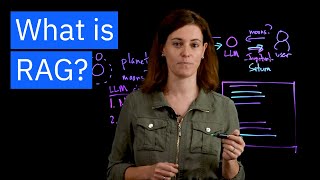
What RAG is, and what it fixes
by IBM Technology
LangChain: models, prompts, chains
by codebasics

Loading and chunking documents
by LangChain

Embeddings, vector stores and hybrid search
by LangChain

The basic RAG chain and chat memory
by LangChain

Better queries: multi-query, fusion, decomposition, HyDE
by LangChain
Lesson frames belong to the creators named in the Credits and are shown from YouTube.
What you learn
What you will be able to do
By the end you will be able to:
- Load and chunk manuals with metadata
- Search with hybrid retrieval and a re-ranker
- Generate cited answers with a refusal rule
- Evaluate recall, correctness and refusal on a real test set
- Serve the chatbot with Streamlit or FastAPI
How it works
How this course works
Watch the lessons
Short video lessons, one module at a time, at your own pace.
Read the notes
Open the Reading tab for the written notes and diagrams of the module.
Practise in the 3D labOptional
Try the module in the free 3D lab, in your browser.
Check yourself
Answer the questions to see what stuck before you move on.
Final assessment
Pass the final once you have been through the modules.
Certificate, if you want oneOptional
Optional, with a page anyone can use to verify it.
Syllabus
Course content, module by module
In order, at whatever pace suits you. Each module ends with a practice task that builds on the last.
- Modules
- 12
- Video lessons
- 25
- Of video
- 11h 4m
- Final questions
- 15
- 01
What RAG is, and what it fixes
4 lessons · 33m - 02
LangChain: models, prompts, chains
1 lesson · 46m - 03
Loading and chunking documents, with lab practice:
1 lesson · 5m - 04
Embeddings, vector stores and hybrid search, with lab practice:
2 lessons · 23m - 05
The basic RAG chain and chat memory, with lab practice:
1 lesson · 6m - 06
Better queries: multi-query, fusion, decomposition, HyDE
5 lessons · 30m - 07
Routing and structured data, with lab practice:
2 lessons · 13m - 08
Re-ranking and advanced indexing
3 lessons · 21m Final assessment · 15 questions, pass mark 60%
3D lab
Practise in the 3D lab
Tune a document assistant by hand: set the chunking and retrieval so it cites the right section, make it refuse when the documents are silent, and keep an agent safe.
- Answers with sourcesAI Workbench, about 25 minOpen in the lab (opens in a new tab): Answers with sources
- A safe agentAI Workbench, about 30 minOpen in the lab (opens in a new tab): A safe agent
Optional. Skip it whenever you like: it never blocks your progress or your certificate.
Project
The course project
Optional practice that ends in the kind of job the course prepares you for, with the documents that go with it.
About 9 hours
A manual-reading assistant over three vendor manuals, with citations and a measured score
Index a PLC manual, a drive manual and a transmitter datasheet with metadata. Add hybrid retrieval and a re-ranker. Build a RAG chain that cites (doc p.N) and says NOT FOUND. Score a thirty-question test set for recall, correctness and refusal. Show the answers on a Streamlit page with sources. Everything runs on free models.
- 8documents in the pack
- 8steps to follow
- Laboptional: in the 3D lab
- 6things to hand in
- 9 hof work, at your pace
Do it in the lab: 4 steps.
Sample document pack, 8 documents, filled in for the scenario
- PlanProject plan: manual-reading assistant for the service desk
- URSRequirements for the manual-reading assistant
- RegisterCorpus register: manuals indexed, editions and chunking
- SDSSoftware design: retrieval stack, prompts and interface
- RegisterTest-set register: thirty questions, extract
- Test reportEvaluation record: configurations A and B on the thirty questions
- ReportEvaluation report: what made the assistant trustworthy
- O&M manualUser guide: the manuals assistant at the service desk
Read inside the course and download as a workbook. The project is optional practice, marked when you submit it; the certificate needs only the modules and the final assessment.
About 6 hours
Ask the maintenance history: RAG over work orders plus routed SQL for counts
Four hundred maintenance work orders with free-text notes. Index the text for questions like 'what was done last time the agitator seal leaked', route counting questions to templated SQL, and evaluate both paths.
- 7documents in the pack
- 6steps to follow
- Laboptional: in the 3D lab
- 5things to hand in
- 6 hof work, at your pace
Do it in the lab: 4 steps.
Sample document pack, 7 documents, filled in for the scenario
- PlanProject plan: ask-the-history assistant for maintenance work orders
- URSRequirements for the work-order assistant
- DatasheetDataset datasheet: maintenance-history-400.csv
- SDSSoftware design: router, text path and count path
- RegisterGold question register: twenty questions with answers computed in Pandas
- Test reportTest record: routing, text path and count path against the gold set
- ReportReport: what the assistant can and cannot be trusted with
Read inside the course and download as a workbook. The project is optional practice, marked when you submit it; the certificate needs only the modules and the final assessment.
Tools
Software, hardware and lessons
Software
Google Colab or a laptop; LangChain, sentence-transformers, FAISS; a free OpenRouter key or Ollama.
Hardware
None. A laptop with 8 GB RAM for the fully local build.
Who it is for
Intermediate. Needs Python (the Python for AI course) and the Generative AI and LLM Foundations course, or equivalent.
Video lessons by
- LangChain
- Krish Naik
- codebasics
- IBM Technology
- KodeKloud
- Microsoft Developer
- freeCodeCamp.org
- SingleStore
- Tech With Tim
Independent creators, credited in full under Credits.
Software you need
What to download, where from, what it costs and how to install it. Every link goes to the maker's own site, never a mirror.
Required
- 01Free, GPU time not guaranteed
Google Colab
Google, in the browser
- Runs on
- Any modern web browser
- Account
- A free Google account
Colab is free to use. In the free version GPUs and TPUs are heavily restricted and not guaranteed, sessions can run for at most 12 hours, and idle sessions are stopped. Paid plans give more reliable access.
Steps
- 1.Open colab.research.google.com and sign in with your Google account.
- 2.Click New notebook (or open the notebook your course links to).
- 3.For a GPU, choose Runtime, then Change runtime type, then pick a GPU if one is offered.
- 4.Type code in a cell and press Shift and Enter to run it.
- Save a copy to your Google Drive so your changes are kept.
- Files on the runtime are deleted when the session ends. Save outputs to Drive.
Open Google Colabcolab.research.google.com - 02Free models with rate limits
OpenRouter
OpenRouter, Inc., in the browser
- Runs on
- Any modern web browser (API works from any language)
- Account
- A free OpenRouter account
Models with IDs ending in :free cost nothing but are limited to 20 requests per minute and 50 requests per day. Buying at least 10 credits raises the daily free-model limit to 1,000 requests.
Steps
- 1.Open openrouter.ai and sign up.
- 2.Go to Keys in your account settings and create an API key. Copy it somewhere safe.
- 3.Pick a model whose ID ends in :free.
- 4.Call it with any OpenAI-compatible client using the base URL https://openrouter.ai/api/v1 and your key.
- Never paste your API key into shared code or public repositories.
- The list of free models changes over time. Check the model page before a class.
Open OpenRouteropenrouter.ai
Optional
Useful, not needed to finish the course.
- 03Free
LangChain
LangChain, Inc., a Python or npm package
- Runs on
- Any system with Python 3.10 or later
- Account
- None needed
Free, open source under the MIT licence. Model providers you call may charge for use.
Steps
- 1.Install Python 3.10 or later and create a virtual environment.
- 2.Run: pip install -U langchain
- 3.Install the package for your model provider, for example: pip install -U langchain-openai or pip install -U langchain-anthropic
- 4.Set your provider's API key as an environment variable and run the quickstart example from the docs.
- Keep API keys in environment variables or a .env file, never in shared code.
Official download pagedocs.langchain.com - 04Free
Ollama
Ollama Inc.
- Runs on
- macOS 14 Sonoma or later, Windows 10 or later, Linux
- Account
- None needed
Ollama is free and open source (MIT licence). Each model you download has its own licence; check it before commercial use.
Steps
- 1.Open ollama.com/download and pick your system.
- 2.On Windows run OllamaSetup.exe; on macOS open the DMG; on Linux run: curl -fsSL https://ollama.com/install.sh | sh
- 3.Open a terminal and run a small model, for example: ollama run <model name> (browse names on ollama.com).
- 4.Type a question at the prompt. Type /bye to exit.
- Models are several GB each. Check your free disk space first.
- More RAM, or a supported GPU, lets you run larger models faster.
- On Windows you can also install from PowerShell: irm https://ollama.com/install.ps1 | iex
Official download pageollama.com
Checked against each maker's own page on 27 September 2026. Trial lengths and editions change; the maker's page is the final word.
What you walk away with
Your certificate for RAG and Chatbots with LangChain
Finish the course, pass the final, and this is the document with your name on it.

Verifiable by anyone
Adds to LinkedIn in one click
QR code on the certificate
Names what you can do
A permanent link
Earned, not attended
Learning is free. The certificate is optional.
Add it now and pay only when you have finished the course, or come back for it later. One-off, US$28.99, with a receipt.
Issued by Wartens Ltd (England and Wales, company no. 15262249) through the EDWartens training portal, as a Certificate of Completion for this self-paced course. Sold in India by Wartens Automation Private Limited. It is not a vendor certification, a university award or a CPD-accredited activity, and it does not certify competence on live equipment. Delivered electronically; see the refund policy.
Practise what you learn in the free 3D lab
Technical work is judged on what you can do: wiring, commissioning, finding a fault. Doing a task yourself teaches more than watching it a second time, and a lab lets you try it safely before you meet real equipment. It does not replace working on real hardware.
- Practise safely, so a mistake costs nothing.
- The lab checks your work like a site test, so you know when it is right.
- Free, in your browser, with nothing to install.
Why learn with EDWartens
What you get with this course.
- Free from the first lesson to the final assessment.
- Practice in a free 3D lab in your browser, with nothing to install.
- Video lessons with written notes and a project.
- An optional certificate that anyone can verify online.
FAQ
Common questions
What do I need before this course?
Comfortable Python and the ideas from the Generative AI course: tokens, prompts and embeddings. If you have done those two courses you are ready.
Do I need a paid API?
No. Hosted models come from OpenRouter's free tier; embeddings and the re-ranker run locally with sentence-transformers; FAISS is local. The fully local build with Ollama needs nothing online at all.
What are the projects in the RAG and Chatbots with LangChain course?
There are two projects. The first is a manual-reading assistant over three vendor manuals. It has citations, a re-ranker, a thirty-question evaluation and a Streamlit page. The second is an assistant over a year of maintenance work orders. It routes text questions to RAG and counting questions to templated SQL.
Why so much on evaluation?
Because a RAG demo is easy and a RAG tool is not. The service desk in the project will accept the assistant only when the numbers say recall above 0.85 and refusal at 1.0. The course teaches you to reach that standard and to prove it.
Is the RAG and Chatbots with LangChain course really free?
Yes. Every module, practice task, project and assessment. You create an account so your progress is saved and the assessments can be marked. The certificate is the only paid item, and only if you want it.
What certificate does the RAG and Chatbots with LangChain course give?
An EDWartens Certificate of Completion, issued when you have finished the modules and passed the final assessment (the project is optional practice), with a verification code anyone can check. It is not a vendor credential and is never described as one.
Who made the video lessons in the RAG and Chatbots with LangChain course?
The creators named in the Credits block at the foot of this page, on their own YouTube channels. EDWartens did not make the videos and the creators are not affiliated with EDWartens. What EDWartens wrote is the study plan, the notes, the practice tasks, the projects and the assessments.
Do I have to use the lab?
No. The lab is optional practice. You can skip it whenever you like, and it never blocks your progress, the final assessment or your certificate.
Is the lab free?
Yes. Every lab level for this course opens in your browser, free, with nothing to install.
Is the RAG and Chatbots with LangChain course free in India, and what does the certificate cost?
Yes. Learning costs ₹0 in India: every module, the written notes, the practice tasks and the final assessment, with no card and no trial period. The only paid item is the optional EDWartens Certificate of Completion, ₹599 including GST for this intermediate course, paid in rupees through Razorpay, and only if you want it after passing the final assessment.
All course factsHide course facts
- Price
- ₹0, free for good. No trial, no card. Comparable classroom training of this length costs about ₹6,999.
- Who it is for
- Engineers, developers and students applying AI to real work
- Format
- 12 self-paced modules, 11h 4m of video, written notes, a practice task per module and one final assessment.
- Level
- Intermediate. Intermediate. Needs Python (the Python for AI course) and the Generative AI and LLM Foundations course, or equivalent.
- Brand
- Vendor-neutral
- Software
- Google Colab or a laptop; LangChain, sentence-transformers, FAISS; a free OpenRouter key or Ollama.
- Hardware
- None. A laptop with 8 GB RAM for the fully local build.
- Certificate
- Optional EDWartens Certificate of Completion, ₹599 inclusive of GST for learners in India, verifiable by code. Not a vendor credential.
- Video lessons by
- LangChain, Krish Naik, codebasics, IBM Technology, KodeKloud, Microsoft Developer, freeCodeCamp.org, SingleStore, Tech With Tim (independent creators, credited below)
- Language
- English
- Last updated
- 27 September 2026
Pairs well with
 PLC programming · FreeSiemens TIA Portal
 PLC programming · FreeSiemens TIA Portal in Three Hours
 PLC programming · FreeTIA Portal: Build a Machine
 Instrumentation · FreeInstrumentation for PLC Engineers
More free courses: Free AI courses for engineers · Free generative AI and ChatGPT courses
Learning paths with this course
- Applied AI engineer · 4 courses
Classroom course, Bangalore
PLC training in Bangalore
The Automation Engineer Program (AEP) is our classroom course in PLC programming and industrial automation, taught in person at our Electronic City centre.
Credits
Who made the video lessons
The video lessons in this course were created by the people below, not by EDWartens. Every lesson streams from its creator's own YouTube channel; EDWartens neither hosts nor sells that footage, and the creators are not affiliated with EDWartens and do not endorse this course. What EDWartens wrote is the study plan, the notes, the practice tasks and the assessments.
- LangChainthe RAG From Scratch series
- Krish Naikthe complete RAG crash course with LangChain
- codebasicsthe LangChain crash course
- IBM TechnologyWhat is RAG
- KodeKloudRAG explained for beginners
- Microsoft Developerthe search-apps, RAG and agents lessons
- freeCodeCamp.orgthe LangGraph complete course
- SingleStorea lesson in "Evaluating a RAG system"
- Tech With Tima lesson in "Build, serve, keep private"
If you are one of these creators and would like a lesson removed or credited differently, write to info@wartens.com.