AI and machine learning · Free online course
Predictive Maintenance with Machine Learning
The industrial AI application with a budget behind it, built end to end: failure modes and what each sensor sees, signals to condition indicators, anomaly detection on normal data, fault classification, deep learning on windows, remaining useful life on NASA's run-to-failure engines, and the alerting and deployment that decide whether anyone acts.
- 5.0· 1 learner review
- 12 modules
- 9h 46m of video
- Intermediate
- English
- ₹0, free
- Lab practice in your browser

₹0Free for good
Worth ₹5,999 by length and depth against classroom training. It has always been free; that is not a former price.
No card. Checkout takes a minute and gives you a receipt.
Overview
About Predictive Maintenance with Machine Learning
Build a predictive maintenance system end to end: sensor signals, anomaly detection, fault classification and remaining useful life.
Predictive Maintenance with Machine Learning is a free, self-paced online course from EDWartens for engineers, developers and students applying AI to real work. It has 12 modules and 9h 46m of video lessons by MATLAB, RealPars, ADASH and others, with written notes and worked problems, a practical project with a document pack and a 15-question final assessment (pass mark 60%). Learning is free with an account; an optional certificate with a public verification code is issued when you pass. Last updated 27 September 2026.
Who it is for: Engineers, developers and students applying AI to real work
This course includes
- 9h 46m of video lessons
- 12 modules with written notes and diagrams
- One final assessment: 15 questions, pass mark 60%
- Ask-an-engineer support from practising engineers
- Lifetime access, the course does not expire
- Optional verifiable certificate when you finish
- Step 1 of 3
Learn the 12 modules
9h 46m of video lessons, written notes and a practice task per module, at your own pace.
- Step 2 of 3
Pass the final assessment
15 questions drawn from every module, pass mark 60%, 3 attempts.
- Step 3 of 3
Take the certificate, if you want it
Optional, paid once, only if you choose it. The course stays free either way.
See the certificate and its price
A look inside


From the lessons
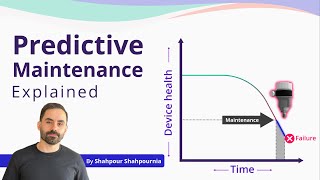
Why predictive, and the P-F curve
by RealPars

Failure modes and what each sensor sees
by ADASH
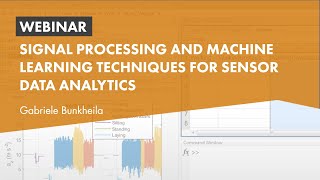
Signals: sampling, windows, spectra
by MATLAB
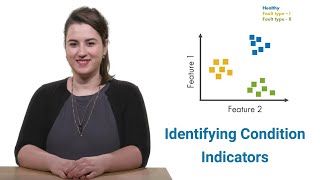
Condition indicators
by MATLAB
Anomaly detection on normal data
by Dave Ebbelaar
Fault classification
by Intelligent Machines
Lesson frames belong to the creators named in the Credits and are shown from YouTube.
What you learn
What you will be able to do
By the end you will be able to:
- Choose sensors using the P-F curve
- Compute spectra, envelopes and condition indicators from windows
- Build a per-asset anomaly detector with a percentile threshold
- Train a fault classifier with grouped validation
- Estimate remaining useful life on the C-MAPSS benchmark
How it works
How this course works
Watch the lessons
Short video lessons, one module at a time, at your own pace.
Read the notes
Open the Reading tab for the written notes and diagrams of the module.
Practise in the 3D labOptional
Try the module in the free 3D lab, in your browser.
Check yourself
Answer the questions to see what stuck before you move on.
Final assessment
Pass the final once you have been through the modules.
Certificate, if you want oneOptional
Optional, with a page anyone can use to verify it.
Syllabus
Course content, module by module
In order, at whatever pace suits you. Each module ends with a practice task that builds on the last.
- Modules
- 12
- Video lessons
- 27
- Of video
- 9h 46m
- Final questions
- 15
- 01
Why predictive, and the P-F curve
3 lessons · 23m - 02
Failure modes and what each sensor sees
2 lessons · 11m - 03
Signals: sampling, windows, spectra
1 lesson · 43m - 04
Condition indicators, with lab practice:
2 lessons · 22m - 05
Anomaly detection on normal data, with lab practice:
3 lessons · 1h 54m - 06
Fault classification, with lab practice:
3 lessons · 28m - 07
Deep learning on windows
4 lessons · 42m - 08
Remaining useful life on NASA's engines, with lab practice:
3 lessons · 55m Final assessment · 15 questions, pass mark 60%
3D lab
Practise in the 3D lab
Practise the choices that decide whether a maintenance model is trusted: a split with no leakage, the right metric and alert threshold, and a data check before you train.
- Data health checkAI Workbench, about 20 minOpen in the lab (opens in a new tab): Data health check
- Train and evaluate without leakageAI Workbench, about 25 minOpen in the lab (opens in a new tab): Train and evaluate without leakage
- Choose the metric and the thresholdAI Workbench, about 25 minOpen in the lab (opens in a new tab): Choose the metric and the threshold
Optional. Skip it whenever you like: it never blocks your progress or your certificate.
Project
The course project
Optional practice that ends in the kind of job the course prepares you for, with the documents that go with it.
About 6 hours
Remaining useful life on NASA's turbofan engines (C-MAPSS FD001)
One hundred engines run to failure, with 21 sensors per cycle. Build the clipped RUL target and drop the constant sensors. Add rolling features. Train a gradient-boosting regressor with grouped cross-validation. Evaluate it on the benchmark's last-cycle test set with RMSE and the asymmetric score. Plot predicted against true RUL for three engines.
- 9documents in the pack
- 6steps to follow
- Laboptional: in the 3D lab
- 4things to hand in
- 6 hof work, at your pace
Do it in the lab: 4 steps.
Sample document pack, 9 documents, filled in for the scenario
- PlanProject plan: remaining-useful-life proof of concept on C-MAPSS FD001
- URSRequirements: RUL estimator for engine-removal planning
- DatasheetData specification: NASA C-MAPSS FD001
- RegisterFeature register: sensors kept, dropped and derived
- ProcedureProcedure: build and evaluate the RUL model
- Test reportTest report: RUL model evaluation, FD001
- Change noticeChange notice: rolling window 10 to 30 cycles
- Risk registerRisk register: using an RUL estimate for removal planning
- ReportFindings report: is RUL estimation worth piloting on our engines?
Read inside the course and download as a workbook. The project is optional practice, marked when you submit it; the certificate needs only the modules and the final assessment.
About 5 hours
Anomaly detection and fault classification on the track's vibration and motor-fleet data
Build the two lower rungs on the track's own data. First, condition indicators from the 2 kHz vibration windows. Second, an IsolationForest anomaly detector fitted on healthy windows, with a percentile threshold and a persistence rule. Third, a fault classifier with grouped cross-validation on the motor-fleet readings. Finish with alert text a technician could act on.
- 8documents in the pack
- 5steps to follow
- Laboptional: in the 3D lab
- 5things to hand in
- 5 hof work, at your pace
Do it in the lab: 4 steps.
Sample document pack, 8 documents, filled in for the scenario
- PlanProject plan: anomaly detection and fault classification pilot, spinning hall 2
- RegisterCondition indicator register
- SDSSoftware design: indicators, detector, classifier and alert
- Test reportTest report: detector and classifier validation
- Change noticeChange notice: remove e2x from the anomaly detector
- Alarm listAlert list: condition-monitoring alerts to maintenance
- ProcedureProcedure: responding to a condition-monitoring alert
- ReportPilot findings for the maintenance manager
Read inside the course and download as a workbook. The project is optional practice, marked when you submit it; the certificate needs only the modules and the final assessment.
Tools
Software, hardware and lessons
Software
Google Colab; NumPy, SciPy, Pandas, scikit-learn; TensorFlow for the optional deep-learning module.
Hardware
None. Wireless vibration sensors and a gateway are discussed, not required.
Who it is for
Intermediate. Needs the Machine Learning with Python course; the Deep Learning course helps for module 7.
Video lessons by
- MATLAB
- RealPars
- ADASH
- Intelligent Machines
- Dave Ebbelaar
- Data Science with Marco
- NeuralNine
- Krish Naik
- Victor Tan
- Data Bowl Recipes
- JCharisTech
- InfluxData
- AIEngineering
Independent creators, credited in full under Credits.
Software you need
What to download, where from, what it costs and how to install it. Every link goes to the maker's own site, never a mirror.
NumPy, SciPy, pandas, scikit-learn and TensorFlow are already installed in Colab.
Required
- 01Free, GPU time not guaranteed
Google Colab
Google, in the browser
- Runs on
- Any modern web browser
- Account
- A free Google account
Colab is free to use. In the free version GPUs and TPUs are heavily restricted and not guaranteed, sessions can run for at most 12 hours, and idle sessions are stopped. Paid plans give more reliable access.
Steps
- 1.Open colab.research.google.com and sign in with your Google account.
- 2.Click New notebook (or open the notebook your course links to).
- 3.For a GPU, choose Runtime, then Change runtime type, then pick a GPU if one is offered.
- 4.Type code in a cell and press Shift and Enter to run it.
- Save a copy to your Google Drive so your changes are kept.
- Files on the runtime are deleted when the session ends. Save outputs to Drive.
Open Google Colabcolab.research.google.com
Checked against each maker's own page on 27 September 2026. Trial lengths and editions change; the maker's page is the final word.
What you walk away with
Your certificate for Predictive Maintenance with Machine Learning
Finish the course, pass the final, and this is the document with your name on it.

Verifiable by anyone
Adds to LinkedIn in one click
QR code on the certificate
Names what you can do
A permanent link
Earned, not attended
Learning is free. The certificate is optional.
Add it now and pay only when you have finished the course, or come back for it later. One-off, US$28.99, with a receipt.
Issued by Wartens Ltd (England and Wales, company no. 15262249) through the EDWartens training portal, as a Certificate of Completion for this self-paced course. Sold in India by Wartens Automation Private Limited. It is not a vendor certification, a university award or a CPD-accredited activity, and it does not certify competence on live equipment. Delivered electronically; see the refund policy.
Learner reviews
5.0
1 review from learners who finished the course
- 51
- 40
- 30
- 20
- 10
- Zohaib· finished the course · September 2026
Feedbaack
Good over all but certificate should be free
Practise what you learn in the free 3D lab
Technical work is judged on what you can do: wiring, commissioning, finding a fault. Doing a task yourself teaches more than watching it a second time, and a lab lets you try it safely before you meet real equipment. It does not replace working on real hardware.
- Practise safely, so a mistake costs nothing.
- The lab checks your work like a site test, so you know when it is right.
- Free, in your browser, with nothing to install.
Why learn with EDWartens
What you get with this course.
- Free from the first lesson to the final assessment.
- Practice in a free 3D lab in your browser, with nothing to install.
- Video lessons with written notes and a project.
- An optional certificate that anyone can verify online.
FAQ
Common questions
Do I need vibration sensors?
No. The course uses the track's vibration windows and motor-fleet readings, and NASA's public engine dataset. The module on sensors tells you what to buy and where to mount it when you do.
What do I need before this course?
The Machine Learning with Python course, or equivalent: features, splits, cross-validation, metrics. Module 7 uses the Deep Learning course's tools but is optional.
What are the projects in the Predictive Maintenance with Machine Learning course?
There are two projects. The first is remaining useful life on NASA's C-MAPSS FD001 engines, evaluated the way the benchmark is. The second covers the two lower rungs on the track's own data. It has an anomaly detector with persistence on vibration windows. It also has a fault classifier with cost-aware thresholds on the motor fleet, with alert text a technician could act on.
Is the Predictive Maintenance with Machine Learning course really free?
Yes. Every module, practice task, project and assessment. You create an account so your progress is saved and the assessments can be marked. The certificate is the only paid item, and only if you want it.
What certificate does the Predictive Maintenance with Machine Learning course give?
An EDWartens Certificate of Completion, issued when you have finished the modules and passed the final assessment (the project is optional practice), with a verification code anyone can check. It is not a vendor credential and is never described as one.
Who made the video lessons in the Predictive Maintenance with Machine Learning course?
The creators named in the Credits block at the foot of this page, on their own YouTube channels. EDWartens did not make the videos and the creators are not affiliated with EDWartens. What EDWartens wrote is the study plan, the notes, the practice tasks, the projects and the assessments.
How long does the Predictive Maintenance with Machine Learning course take?
Plan on about 16 hours in all, including the video lessons, notes and practice tasks. It is self-paced, so you work through the twelve modules at your own speed.
Do I have to use the lab?
No. The lab is optional practice. You can skip it whenever you like, and it never blocks your progress, the final assessment or your certificate.
Is the lab free?
Yes. Every lab level for this course opens in your browser, free, with nothing to install.
Is the Predictive Maintenance with Machine Learning course free in India, and what does the certificate cost?
Yes. Learning costs ₹0 in India: every module, the written notes, the practice tasks and the final assessment, with no card and no trial period. The only paid item is the optional EDWartens Certificate of Completion, ₹599 including GST for this intermediate course, paid in rupees through Razorpay, and only if you want it after passing the final assessment.
All course factsHide course facts
- Price
- ₹0, free for good. No trial, no card. Comparable classroom training of this length costs about ₹5,999.
- Who it is for
- Engineers, developers and students applying AI to real work
- Format
- 12 self-paced modules, 9h 46m of video, written notes, a practice task per module and one final assessment.
- Level
- Intermediate. Intermediate. Needs the Machine Learning with Python course; the Deep Learning course helps for module 7.
- Brand
- Vendor-neutral
- Software
- Google Colab; NumPy, SciPy, Pandas, scikit-learn; TensorFlow for the optional deep-learning module.
- Hardware
- None. Wireless vibration sensors and a gateway are discussed, not required.
- Certificate
- Optional EDWartens Certificate of Completion, ₹599 inclusive of GST for learners in India, verifiable by code. Not a vendor credential.
- Video lessons by
- MATLAB, RealPars, ADASH, Intelligent Machines, Dave Ebbelaar, Data Science with Marco, NeuralNine, Krish Naik, Victor Tan, Data Bowl Recipes, JCharisTech, InfluxData, AIEngineering (independent creators, credited below)
- Language
- English
- Last updated
- 27 September 2026
Pairs well with
 PLC programming · FreeSiemens TIA Portal
 PLC programming · FreeSiemens TIA Portal in Three Hours
 PLC programming · FreeTIA Portal: Build a Machine
 Instrumentation · FreeInstrumentation for PLC Engineers
More free courses: Free AI courses for engineers · Free maintenance and reliability courses
Learning paths with this course
- Industrial AI engineer · 4 courses
Classroom course, Bangalore
PLC training in Bangalore
The Automation Engineer Program (AEP) is our classroom course in PLC programming and industrial automation, taught in person at our Electronic City centre.
Credits
Who made the video lessons
The video lessons in this course were created by the people below, not by EDWartens. Every lesson streams from its creator's own YouTube channel; EDWartens neither hosts nor sells that footage, and the creators are not affiliated with EDWartens and do not endorse this course. What EDWartens wrote is the study plan, the notes, the practice tasks and the assessments.
- MATLABthe predictive maintenance series, the signal-processing talk and the prognostics case study
- RealParspredictive maintenance explained and machine learning for predictive maintenance
- ADASHvibration analysis for beginners
- Intelligent Machinesmachine learning and deep learning for fault diagnosis, and the turbofan RUL videos
- Dave Ebbelaardetecting outliers in sensor data
- Data Science with Marcoanomaly detection in time series
- NeuralNineanomaly detection for time-series data
- Krish Naikthe complete anomaly detection tutorial
- Victor Tanthe end-to-end predictive maintenance workflow
- Data Bowl Recipespredictive maintenance with machine learning
- JCharisTechpredictive maintenance with machine learning in Python
- InfluxDataa lesson in "Deploying and measuring"
- AIEngineeringa lesson in "Deploying and measuring"
If you are one of these creators and would like a lesson removed or credited differently, write to info@wartens.com.