Quality management · Free online course
Six Sigma Green Belt Training for Manufacturing
Free Six Sigma Green Belt course for production and quality staff: run DMAIC with Gage R&R, Cpk, tests and control charts. The certificate is optional and paid.
- 1.0· 1 learner review
- 15 modules
- 14h 59m of video
- Intermediate
- English
- ₹0, free

₹0Free for good
Worth ₹8,999 by length and depth against classroom training. It has always been free; that is not a former price.
No card. Checkout takes a minute and gives you a receipt.
Overview
About Six Sigma Green Belt Training for Manufacturing
Learn the Six Sigma Green Belt toolkit on factory data: DMAIC, Gage R&R, capability, hypothesis tests and control charts.
Six Sigma Green Belt Training for Manufacturing is a free, self-paced online course from EDWartens for quality, production and process engineers. It has 15 modules and 14h 59m of video lessons by NPTEL IIT Kharagpur, Digital E-Learning, The Open Educator and others, with written notes and worked problems, a practical project with a document pack and a 15-question final assessment (pass mark 60%). Learning is free with an account; an optional certificate with a public verification code is issued when you pass. Last updated 27 September 2026.
Who it is for: Quality, production and process engineers
This course includes
- 14h 59m of video lessons
- 15 modules with written notes and diagrams
- One final assessment: 15 questions, pass mark 60%
- Ask-an-engineer support from practising engineers
- Lifetime access, the course does not expire
- Optional verifiable certificate when you finish
- Step 1 of 3
Learn the 15 modules
14h 59m of video lessons, written notes and a practice task per module, at your own pace.
- Step 2 of 3
Pass the final assessment
15 questions drawn from every module, pass mark 60%, 3 attempts.
- Step 3 of 3
Take the certificate, if you want it
Optional, paid once, only if you choose it. The course stays free either way.
See the certificate and its price
A look inside


From the lessons
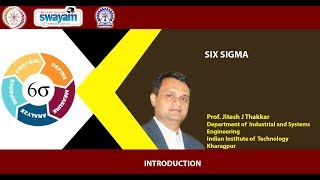
Six Sigma, sigma level and the DMAIC roadmap
by NPTEL IIT Kharagpur
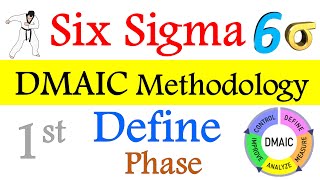
Define: the voice of the customer and critical-to-quality
by Digital E-Learning

Measure: the process, the data and the scale it is on
by Digital E-Learning

Process capability: normality, Cp and Cpk
by The Open Educator
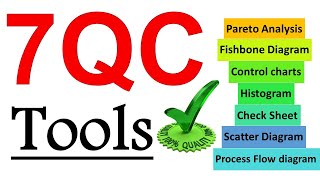
Analyse: root cause, the seven quality tools and FMEA
by Digital E-Learning

Two-sample tests and analysis of variance
by NPTEL IIT Kharagpur
Lesson frames belong to the creators named in the Credits and are shown from YouTube.
What you learn
What you will be able to do
By the end you will be able to:
- Convert reject data into DPU, DPMO and a sigma level
- Prove a measurement system with a crossed Gage R&R
- Compute Cp, Cpk, Pp and Ppk
- Find root causes with the seven quality tools and FMEA
- Set up control charts and a control plan
How it works
How this course works
Watch the lessons
Short video lessons, one module at a time, at your own pace.
Read the notes
Open the Reading tab for the written notes and diagrams of the module.
Check yourself
Answer the questions to see what stuck before you move on.
Final assessment
Pass the final once you have been through the modules.
Certificate, if you want oneOptional
Optional, with a page anyone can use to verify it.
Syllabus
Course content, module by module
In order, at whatever pace suits you. Each module ends with a practice task that builds on the last.
- Modules
- 15
- Video lessons
- 46
- Of video
- 14h 59m
- Final questions
- 15
- 01
Six Sigma, sigma level and the DMAIC roadmap
4 lessons · 1h 3m - 02
Quality, the cost of poor quality and lean beside Six Sigma
3 lessons · 59m - 03
Define: the voice of the customer and critical-to-quality
3 lessons · 1h 0m - 04
Define: choosing the project, the charter and SIPOC
3 lessons · 1h 10m - 05
Measure: the process, the data and the scale it is on
4 lessons · 1h 6m - 06
Measurement system analysis and Gage R&R
2 lessons · 1h 14m - 07
Process capability: normality, Cp and Cpk
3 lessons · 1h 3m - 08
Capability in practice: centred and off-centred processes
3 lessons · 1h 4m Final assessment · 15 questions, pass mark 60%
Project
The course project
Optional practice that ends in the kind of job the course prepares you for, with the documents that go with it.
About 18 hours
DMAIC on a die-casting line: porosity rejects from 6.8 % to under 2 % with a gauge study, a factorial and a control plan
Run a Green Belt project end to end on a high-pressure die-casting line whose gearbox housings fail the leak test for porosity. Cost the problem. Write the charter, SIPOC and CTQs. Prove the leak tester with a crossed Gage R&R, and fix it when it fails. Establish baseline capability and sigma level. Test the suspected causes with t-tests, ANOVA and regression. Run a 2³ factorial. Then hold the gain with X̄-R and p charts and a control plan. You deliver your own charter, Measure and Analyse reports with the arithmetic shown, control plan and data. The sample pack shows what the sponsor sees at each tollgate.
- 6documents in the pack
- 8steps to follow
- 6things to hand in
- 18 hof work, at your pace
Sample document pack, 6 documents, filled in for the scenario
- PlanProject Charter, SIPOC and CTQs: Porosity Rejects on Die-Casting Line DC2
- ReportMeasure Report: Data Collection Plan, Gage R&R on the Leak Tester, Baseline Capability and Sigma Level
- ReportAnalyse Report: Hypothesis Tests, Regression and the 2³ Factorial
- ProcedureImprove and Control: Process Settings, Confirmation, Control Plan and Control Charts for DC2 / GH-4412
- RegisterData Register: Gauge Studies, Baseline Subgroups, Test Data and Factorial Runs
- Training recordTraining Record: Control Plan, Charts and the Leak-Test Gauge
Read inside the course and download as a workbook. The project is optional practice, marked when you submit it; the certificate needs only the modules and the final assessment.
Tools
Software, hardware and lessons
Software
None required. A spreadsheet such as MS Excel for the capability, control chart and hypothesis test arithmetic. Minitab is demonstrated in some lessons and is useful, but it is not needed to finish the course.
Hardware
None. An instrument and a few parts from your own workplace make the Gage R&R practice task real, if you have access to them.
Who it is for
Intermediate. Assumes school-level algebra and some production, quality or shop-floor experience. No earlier statistics course is needed, and the statistics are built up from scratch.
Video lessons by
- NPTEL IIT Kharagpur
- Digital E-Learning
- The Open Educator
- Simple Learning Pro
Independent creators, credited in full under Credits.
Software you need
What to download, where from, what it costs and how to install it. Every link goes to the maker's own site, never a mirror.
Nothing to install
A spreadsheet is enough for the capability, control chart and hypothesis test arithmetic. Minitab is shown in some lessons but is not needed.
Optional
Useful, not needed to finish the course.
- 01Free
LibreOffice
The Document Foundation
- Runs on
- Windows 10 or 11, macOS 11 or newer (Intel or Apple silicon), Linux
- Account
- None needed
- Size
- up to 1.5 GB of disk space on Windows
LibreOffice is free, open-source software under the Mozilla Public License 2.0, for any use including business. Calc is its spreadsheet.
Steps
- 1.Open the LibreOffice download page.
- 2.Check the page has picked your operating system, then select Download.
- 3.Run the installer (administrator rights are needed on Windows).
- 4.Start LibreOffice Calc for spreadsheet work.
- 5.Save as .xlsx if you need to share files with Excel users.
- Choose the latest main version unless your organisation asks for the older, more conservative release.
Official download pagelibreoffice.org - 02Free trial: 14 days
Minitab Statistical Software
Minitab
- Runs on
- Windows 11 64-bit (x86) for the desktop app; Chrome, Edge or Safari for Minitab on the web
- Account
- An online registration with your email address
The trial licence is valid for 14 days from activation and cannot be extended. After that a paid subscription is needed.
Steps
- 1.Open the Minitab free trial page and select Start Free Trial.
- 2.Fill in the registration form.
- 3.Open the activation link Minitab emails you (check spam; it can take 15 minutes).
- 4.Use Minitab in your browser, or download the Windows desktop app.
- 5.Sign in with the same details to start the 14-day trial.
- Activate the trial only when you can complete the course modules within 14 days.
- ARM-based Windows PCs are not supported by the desktop app; use the web version instead.
Official download pageminitab.comAlternatives
- LibreOffice Calc: Free spreadsheet for basic statistics if the trial has ended.
Checked against each maker's own page on 27 September 2026. Trial lengths and editions change; the maker's page is the final word.
What you walk away with
Your certificate for Six Sigma Green Belt Training for Manufacturing
Finish the course, pass the final, and this is the document with your name on it.
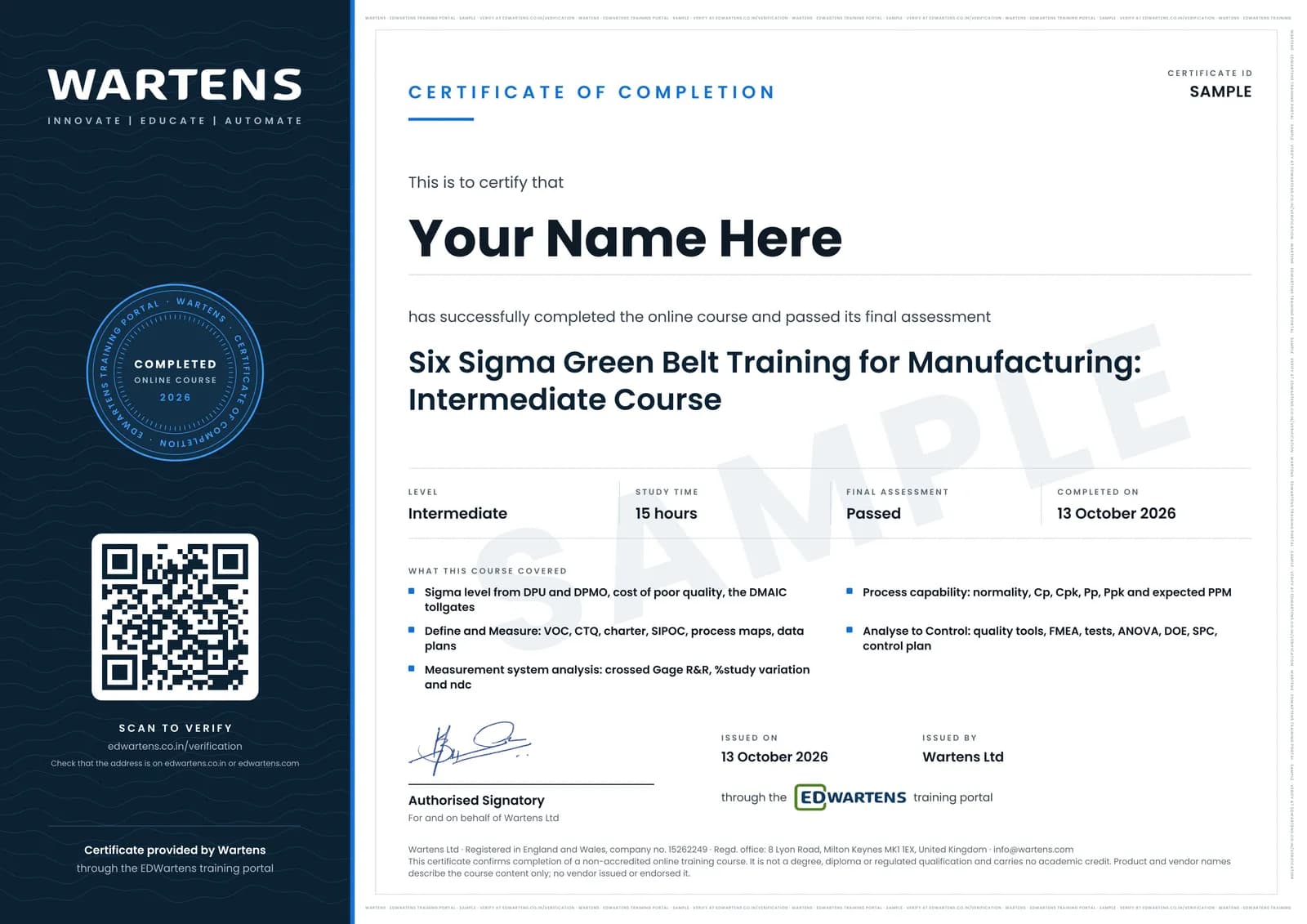
Verifiable by anyone
Adds to LinkedIn in one click
QR code on the certificate
Names what you can do
A permanent link
Earned, not attended
Learning is free. The certificate is optional.
Add it now and pay only when you have finished the course, or come back for it later. One-off, US$28.99, with a receipt.
Issued by Wartens Ltd (England and Wales, company no. 15262249) through the EDWartens training portal, as a Certificate of Completion for this self-paced course. Sold in India by Wartens Automation Private Limited. It is not a vendor certification, a university award or a CPD-accredited activity, and it does not certify competence on live equipment. Delivered electronically; see the refund policy.
Learner reviews
1.0
1 review from learners who finished the course
- 50
- 40
- 30
- 20
- 11
- Reehan· finished the course · October 2026
Fake i completed the exam because it showed free and unable to download for free is a scam
Why learn with EDWartens
What you get with this course.
- Free from the first lesson to the final assessment.
- Video lessons with written notes and a project.
- An optional certificate that anyone can verify online.
FAQ
Common questions
Can I get a Six Sigma Green Belt for free?
You can learn the Green Belt body of knowledge for free. A recognised Green Belt certification comes from passing a certifying body's paid examination. ASQ, for example, asks for three years of on-the-job experience in one or more areas of its Green Belt Body of Knowledge. It says educational waivers are not granted for the exam. This course is free training against that body of knowledge, with every module and assessment at no cost. Its optional paid certificate is an EDWartens certificate of completion, not an ASQ or IASSC credential.
What is the ASQ Six Sigma Green Belt exam like?
The computer-delivered ASQ Certified Six Sigma Green Belt exam has 110 multiple-choice questions, of which 100 are scored. The exam time is 4 hours and 18 minutes. ASQ says all its examinations are open book, so candidates bring their own reference materials. A basic scientific calculator is provided on screen. The questions test ASQ's Green Belt Body of Knowledge. This course works through it in order with the arithmetic done, from DPMO and sigma level to Cpk, hypothesis tests and control charts.
What is the difference between a Six Sigma Green Belt and a Black Belt?
A Green Belt works on improvement projects, usually alongside or under the guidance of a Black Belt. ASQ describes the Green Belt as playing a critical role in quality improvement projects. Green Belt work centres on the DMAIC tools. These are charters, Gage R&R, capability, hypothesis tests and control charts, which are the tools this course covers.
Is this the same as an ASQ or IASSC Green Belt certification?
No. ASQ and IASSC each run their own paid Green Belt examinations and issue their own credentials. That is usually what an employer means by the phrase. This course is free EDWartens training against the Green Belt body of knowledge. It is preparation for a Green Belt role, and for a paid examination if you choose to sit one. It is not an ASQ or IASSC certification. EDWartens is not affiliated with either body, and nothing here is described as equivalent to their credentials.
What do I need to know before starting?
School-level algebra, and enough time on a shop floor or in a quality department to describe one real process. No earlier statistics course is assumed. The average, the standard deviation, the normal curve and every test used later are built up inside the course.
Do I need Minitab?
No. Minitab appears in some lessons because many quality departments use it, and the notes say what it is doing at each step. Every calculation in the practice tasks can be done in a spreadsheet such as MS Excel. The capability, control chart and hypothesis test modules are worked that way.
Do I need a factory to do the practice tasks?
It helps. Most tasks are written for your own line: a month of reject data, fifty consecutive readings, twenty five subgroups of five, an instrument for the Gage R&R. If you are not on a shop floor at the moment, each task can be done on the sample data given with it. The arithmetic and the judgement are the same.
Is the Six Sigma Green Belt Training for Manufacturing course really free?
Yes. Every module, practice task and assessment costs nothing. You create an account so your progress is saved and the assessments can be marked. The certificate is the only optional paid item.
What certificate does the Six Sigma Green Belt Training for Manufacturing course give?
An EDWartens Certificate of Completion, issued when you have finished every module and passed the final assessment at 60 per cent, with a verification code anyone can check. It records training against the Green Belt body of knowledge. It is not a vendor credential and not a Green Belt certification from ASQ or IASSC. It is never described as one.
Who made the video lessons in the Six Sigma Green Belt Training for Manufacturing course?
The creators named in the Credits block at the foot of this page, on their own YouTube channels. They are NPTEL IIT Kharagpur for the lecture spine, Digital E-Learning for the phase explainers and The Open Educator for the Excel and Minitab work. EDWartens did not make the videos and the creators are not affiliated with EDWartens. What EDWartens wrote is the study plan, the module notes, the practice tasks and the assessments.
Will this help me move from production into quality or continuous improvement?
That is who it is written for. Quality and CI engineer posts at automotive, electronics and FMCG plants name Green Belt on the requirement line. The interview asks you to walk through a DMAIC project and read a Cpk against a customer requirement. It also asks what a control chart told you. This course gives you the body of knowledge and the worked arithmetic. Whether you later pay for an ASQ or IASSC examination is a separate decision.
Is the Six Sigma Green Belt Training for Manufacturing course free in India, and what does the certificate cost?
Yes. Learning costs ₹0 in India: every module, the written notes, the practice tasks and the final assessment, with no card and no trial period. The only paid item is the optional EDWartens Certificate of Completion, ₹599 including GST for this intermediate course, paid in rupees through Razorpay, and only if you want it after passing the final assessment.
All course factsHide course facts
- Price
- ₹0, free for good. No trial, no card. Comparable classroom training of this length costs about ₹8,999.
- Who it is for
- Quality, production and process engineers
- Format
- 15 self-paced modules, 14h 59m of video, written notes, a practice task per module and one final assessment.
- Level
- Intermediate. Intermediate. Assumes school-level algebra and some production, quality or shop-floor experience. No earlier statistics course is needed, and the statistics are built up from scratch.
- Brand
- Vendor-neutral
- Software
- None required. A spreadsheet such as MS Excel for the capability, control chart and hypothesis test arithmetic. Minitab is demonstrated in some lessons and is useful, but it is not needed to finish the course.
- Hardware
- None. An instrument and a few parts from your own workplace make the Gage R&R practice task real, if you have access to them.
- Certificate
- Optional EDWartens Certificate of Completion, ₹599 inclusive of GST for learners in India, verifiable by code. Not a vendor credential.
- Video lessons by
- NPTEL IIT Kharagpur, Digital E-Learning, The Open Educator, Simple Learning Pro (independent creators, credited below)
- Language
- English
- Last updated
- 27 September 2026
Pairs well with
 PLC programming · FreeSiemens TIA Portal
 PLC programming · FreeSiemens TIA Portal in Three Hours
 PLC programming · FreeTIA Portal: Build a Machine
 Instrumentation · FreeInstrumentation for PLC Engineers
More free courses: Free Six Sigma and quality courses · Free project management courses
Classroom course, Bangalore
PLC training in Bangalore
The Automation Engineer Program (AEP) is our classroom course in PLC programming and industrial automation, taught in person at our Electronic City centre.
Credits
Who made the video lessons
The video lessons in this course were created by the people below, not by EDWartens. Every lesson streams from its creator's own YouTube channel; EDWartens neither hosts nor sells that footage, and the creators are not affiliated with EDWartens and do not endorse this course. What EDWartens wrote is the study plan, the notes, the practice tasks and the assessments.
- NPTEL IIT Kharagpurthe lecture spine, from the NOC Jan 2019 Six Sigma course: quality management basics, voice of the customer, project identification and selection, process characteristics and analysis, measurement system fundamentals and the Gage R&R study, process capability concepts, measures and indices, hypothesis testing for single and two populations, correlation and regression, FMEA, the introduction to design of experiments, and statistical process control with control charts for variables
- Digital E-Learningthe short explainers that open each phase: what Six Sigma is, the DMAIC guide, DPU, DPMO and PPM, cost of quality against cost of poor quality, lean beside Six Sigma, the Define, Measure, Improve and Control phase videos, CTQ, the project charter, SIPOC, scales of measurement, the seven quality tools, five whys, the fishbone diagram, hypothesis testing, type I against type II error, ANOVA, common against special cause, control limits against specification limits, and defect against defective
- The Open Educatorthe worked spreadsheet and Minitab sessions: the normality probability plot, centred and off-centred capability studies in MS Excel, Cp and Cpk against Pp and Ppk, the p value and the level of significance, the four-step two-sample t test, and choosing between p, np, c and u charts
- Simple Learning Proa lesson in "Measure: the process, the data and the scale it is on"
If you are one of these creators and would like a lesson removed or credited differently, write to info@wartens.com.