India's Semiconductor Push: What Tata Electronics, Micron and the New Fabs Mean for Automation Engineers

What is being built
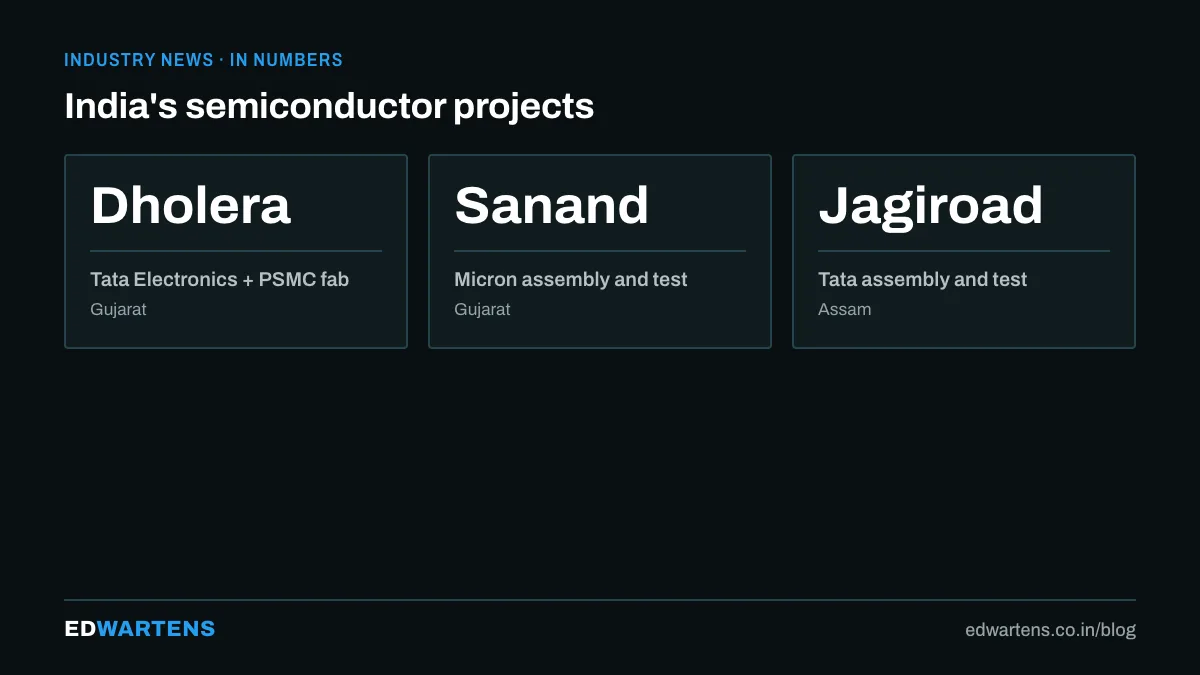
Under the India Semiconductor Mission, a set of projects that did not exist three years ago is now under construction or ramping: Tata Electronics' fab at Dholera with PSMC, its assembly and test plant at Jagiroad in Assam, Micron's assembly and test facility at Sanand, and the CG Power, Kaynes and HCL-Foxconn OSAT plants in Gujarat and Uttar Pradesh. Together they represent the first wave of high-volume chip manufacturing on Indian soil, and every one of them is an automation project first.
What a fab automates
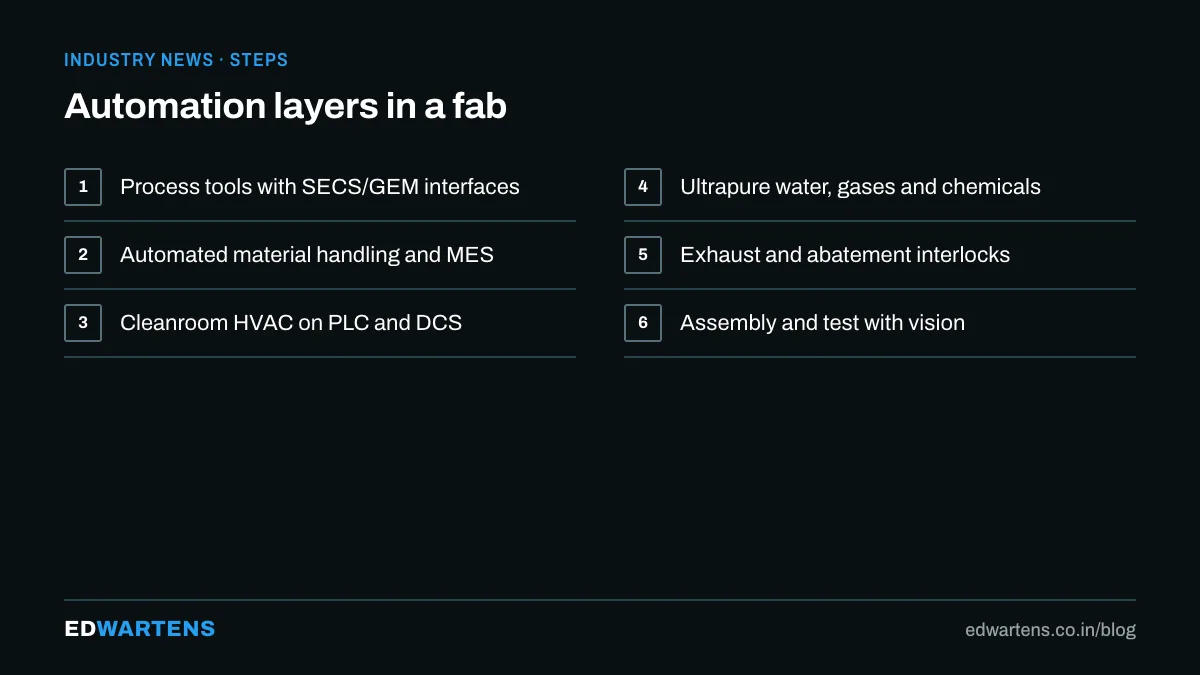
A semiconductor plant is the most automated factory type there is:
- Process tools (lithography, etch, deposition, implant) run on their own controllers and talk to the factory over SECS/GEM and EDA standards.
- Automated material handling: overhead hoist transport moving wafer pods between tools, scheduled by a manufacturing execution system.
- Facilities: cleanroom air handling, ultrapure water, chemical and gas delivery, exhaust and abatement, all on PLC and DCS with thousands of interlocks and tight tolerances on temperature, humidity and pressure.
- Assembly and test: die attach, wire bond, moulding, test handlers, with vision inspection at every stage.
The facilities side alone is a larger automation scope than most Indian factories in their entirety.
The roles that are opening
- Facilities automation engineer: PLC and DCS for cleanroom HVAC, gases, chemicals and water. The most transferable role for a PLC engineer with BMS or process experience.
- Equipment engineer: owning a class of process tool, its automation interface and its uptime.
- Automation and MES engineer: SECS/GEM integration, dispatching, data.
- Instrumentation and calibration: thousands of transmitters and analysers on tight tolerances.
- Vision and test automation: inspection on the assembly and test side.
Semiconductor employers value process discipline, documentation and cleanroom behaviour, closer to pharma than to a car plant, which is why the GAMP and validation mindset transfers.
How to prepare
- A PLC platform deeply, including PID and analog handling: TIA Portal or Studio 5000.
- Process control and instrumentation: instrumentation, PID, DCS.
- Building services and HVAC control: the BMS course.
- Networks and data: PROFINET, OPC UA.
- Read about SECS/GEM; it is the semiconductor equivalent of OPC UA and few Indian engineers know it.
Where and who
Gujarat (Dholera, Sanand), Assam (Jagiroad), Karnataka (Mysuru, Kochi-Chennai corridor announcements), Uttar Pradesh (Jewar). The employers are the plant owners, their EPCs and facility contractors, the tool vendors' local service teams, and the automation vendors supplying the DCS and PLC systems. Expect recruitment drives targeting engineers with three to eight years in pharma, chemicals and precision manufacturing.
If you want classroom training with placement support, where the conditions apply and are published, see our PLC training in Bangalore with a written job guarantee.
Frequently asked questions
Do I need a semiconductor background? No. The plants are hiring for automation, instrumentation and facilities skills and training the semiconductor part.
When do the jobs start? Facilities and construction automation roles are open now; tool and production roles scale with each ramp through 2026 and 2027.
Is Bangalore relevant? Design and test companies are already here; manufacturing is in Gujarat and Assam, and Karnataka's announced projects are at the planning stage.
Learn this, free
The courses that teach this
Every lesson, the written notes and the practice are free with an account. Only the certificate is optional and paid.


