

Quality management · Free online course
Electrical and Instrumentation QA/QC Inspection
Inspect electrical and instrumentation construction the way an EPC site expects: the QA/QC role and the ITP, method statements and inspection requests, material receiving, cable containment and laying, glanding and terminations, insulation resistance and continuity records, earthing and bonding, equipment and instrument installation, loop checks from the QC side, NCRs, punch lists and the handover dossier.
- 13 modules
- 7h 10m of video
- Beginner
- English
- ₹0, free
- Lab practice in your browser

₹0Free for good
Worth ₹3,999 by length and depth against classroom training. It has always been free; that is not a former price.
No card. Checkout takes a minute and gives you a receipt.
Certificate ₹499, optional. The course is free either way.
Overview
About Electrical and Instrumentation QA/QC Inspection
Learn the work of an electrical and instrumentation QC inspector on site: ITPs, test records, loop checks, NCRs and handover.
Electrical and Instrumentation QA/QC Inspection is a free, self-paced online course from EDWartens for electrical and instrumentation graduates, site technicians and site engineers moving into QA/QC on EPC, power, oil and gas, water and industrial projects in the Gulf and worldwide. It has 13 modules and 7h 10m of video lessons, with written notes, a practice task per module, a practical project and a final assessment of 15 questions (pass mark 60%). Learning costs nothing and needs only a free account. The optional EDWartens Certificate of Completion, verifiable by code, is a one-off ₹499 inclusive of GST for learners in India; it is not a vendor credential. Updated 1 November 2026.
Who it is for: Electrical and instrumentation graduates, site technicians and site engineers moving into QA/QC on EPC, power, oil and gas, water and industrial projects in the Gulf and worldwide
This course includes
- 7h 10m of video lessons
- 13 modules with written notes and diagrams
- One final assessment: 15 questions, pass mark 60%
- Ask-an-engineer support from practising engineers
- Lifetime access, the course does not expire
- Optional verifiable certificate when you finish
- Step 1 of 3
Learn the 13 modules
7h 10m of video lessons, written notes and a practice task per module, at your own pace.
- Step 2 of 3
Pass the final assessment
15 questions drawn from every module, pass mark 60%, 3 attempts.
- Step 3 of 3
Take the certificate, if you want it
Optional, paid once, only if you choose it. The course stays free either way.
See the certificate and its price
A look inside


From the lessons

The E&I QA/QC inspector on an EPC site
by QualityEngineers Guide

Material receiving inspection
by Quality Control with Frans
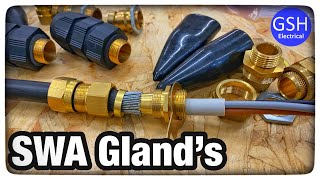
Cable glanding and termination inspection
by GSH Electrical
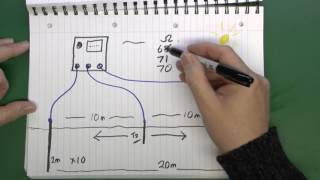
Earthing and bonding inspection
by John Ward (jwflame)

Instrument installation and hook-up inspection
by Instrumentation ABC

Nonconformance reports and corrective action
by QualityEngineers Guide
Lesson frames belong to the creators named in the Credits and are shown from YouTube.
What you learn
What you will be able to do
By the end you will be able to:
- Write ITP lines with hold, witness, review and surveillance points
- Inspect cable laying, glands, terminations and earthing
- Witness insulation resistance and continuity tests and judge the records
- Check a loop folder and witness loop checks from the QC side
- Write NCRs that get closed and compile a punch list
How it works
How this course works
Watch the lessons
Short video lessons, one module at a time, at your own pace.
Read the notes
Open the Reading tab for the written notes and diagrams of the module.
Practise in the 3D labOptional
Try the module in the free 3D lab, in your browser.
Check yourself
Answer the questions to see what stuck before you move on.
Final assessment
Pass the final once you have been through the modules.
Certificate, if you want oneOptional
Optional, with a page anyone can use to verify it.
Syllabus
Course content, module by module
In order, at whatever pace suits you. Each module ends with a practice task that builds on the last.
- Modules
- 13
- Video lessons
- 33
- Of video
- 7h 10m
- Final questions
- 15
- 01
The E&I QA/QC inspector on an EPC site
2 lessons · 27m - 02
ITPs, inspection points, method statements and inspection requests
3 lessons · 14m - 03
Material receiving inspection
2 lessons · 39m - 04
Cable containment and cable laying
4 lessons · 31m - 05
Cable glanding and termination inspection
4 lessons · 30m - 06
Insulation resistance and continuity test records
3 lessons · 1h 5m - 07
Earthing and bonding inspection
4 lessons · 1h 46m - 08
Electrical equipment installation: switchgear, transformers and motors
3 lessons · 48m Final assessment · 15 questions, pass mark 60%
3D lab
Practise in the 3D lab
Do a loop check yourself in the Process lab, so you know what a good loop check record looks like before you sign one as an inspector.
- Loop checkProcess lab, about 35 minOpen in the lab (opens in a new tab): Loop check
Optional. Skip it whenever you like: it never blocks your progress or your certificate.
Project
The course project
Optional practice that ends in the kind of job the course prepares you for, with the documents that go with it.
About 10 hours
QC pack for an LV switchboard subsystem: ITP, cable test record, NCR, punch list and handover dossier index
Act as the contractor's E&I QC inspector for one subsystem, an LV switchboard feeding six pump motors at a water treatment plant. Write the ITP, review the cable test record, raise and close an NCR, run the punch list and score the handover dossier. The sample pack shows each document filled in.
- 5documents in the pack
- 10steps to follow
- 5things to hand in
- 10 hof work, at your pace
Sample document pack, 5 documents, filled in for the scenario
- RegisterInspection and test plan: subsystem 21-SB-01, LV switchboard and pump feeders
- Test reportCable test record: 21-SB-01 power cables
- ReportNonconformance report NCR-EI-007: indoor glands on outdoor motor entries
- Punch listPunch list: subsystem 21-SB-01 walkdown
- RegisterHandover dossier index: subsystem 21-SB-01
Read inside the course and download as a workbook. The project is optional practice, marked when you submit it; the certificate needs only the modules and the final assessment.
Tools
Software, hardware and lessons
Software
A spreadsheet (LibreOffice Calc is free) for the ITP, the test records, the NCR log and the punch list. Nothing else is needed.
Hardware
None. If you can borrow an insulation tester and a multimeter at work, the practice tasks are better for it, but every task can be done on paper.
Who it is for
Beginner to intermediate. For electrical and instrumentation diploma and degree graduates, site technicians and site engineers moving into QA/QC. You should know what a cable, a breaker and a 4-20 mA transmitter are; no inspection experience is needed.
Video lessons by
- QualityEngineers Guide
- Engineering Management Institute
- Quality Control with Frans
- Sofeast
- IIQA
- eFIXX
- ELEK Software
- Rashid iqubal
- GSH Electrical
- CMP Products
- LEARN ELECTRICS
- Polycab India Limited
- Tom Sandri
- John Ward (jwflame)
- Master Electricians New Zealand
- OMICRONenergy
- SparkyNinja
- Eaton
- Gaurav J - TheElectricalGuy
- The Electrical Guy
- eFunda Engineers
- Instrumentation ABC
- Swagelok
- Engineering Design & Management
- Oil & Gas - Completions Coordinator
- CommissioningCoach.com
Independent creators, credited in full under Credits.
Software you need
What to download, where from, what it costs and how to install it. Every link goes to the maker's own site, never a mirror.
Nothing to install
A spreadsheet is enough for the ITP, the test records, the NCR log, the punch list and the dossier index.
Optional
Useful, not needed to finish the course.
- 01Free
LibreOffice
The Document Foundation
- Runs on
- Windows 10 or 11, macOS 11 or newer (Intel or Apple silicon), Linux
- Account
- None needed
- Size
- up to 1.5 GB of disk space on Windows
LibreOffice is free, open-source software under the Mozilla Public License 2.0, for any use including business. Calc is its spreadsheet.
Steps
- 1.Open the LibreOffice download page.
- 2.Check the page has picked your operating system, then select Download.
- 3.Run the installer (administrator rights are needed on Windows).
- 4.Start LibreOffice Calc for spreadsheet work.
- 5.Save as .xlsx if you need to share files with Excel users.
- Choose the latest main version unless your organisation asks for the older, more conservative release.
Official download pagelibreoffice.org
Checked against each maker's own page on 27 September 2026. Trial lengths and editions change; the maker's page is the final word.
What you walk away with
Your certificate for Electrical and Instrumentation QA/QC Inspection
Finish the course, pass the final, and this is the document with your name on it.

Verifiable by anyone
Adds to LinkedIn in one click
QR code on the certificate
Names what you can do
A permanent link
Earned, not attended
Learning is free. The certificate is optional.
Add it now and pay only when you have finished the course, or come back for it later. One-off, US$23.99, with a receipt.
Issued by Wartens Ltd (England and Wales, company no. 15262249) through the EDWartens training portal, as a Certificate of Completion for this self-paced course. Sold in India by Wartens Automation Private Limited. It is not a vendor certification, a university award or a CPD-accredited activity, and it does not certify competence on live equipment. Delivered electronically; see the refund policy.
Practise what you learn in the free 3D lab
Technical work is judged on what you can do: wiring, commissioning, finding a fault. Doing a task yourself teaches more than watching it a second time, and a lab lets you try it safely before you meet real equipment. It does not replace working on real hardware.
- Practise safely, so a mistake costs nothing.
- The lab checks your work like a site test, so you know when it is right.
- Free, in your browser, with nothing to install.
Why learn with EDWartens
What you get with this course.
- Free from the first lesson to the final assessment.
- Practice in a free 3D lab in your browser, with nothing to install.
- Video lessons with written notes and a project.
- An optional certificate that anyone can verify online.
FAQ
Common questions
Who is this E&I QA/QC inspection course for?
It is for electrical and instrumentation diploma and degree graduates, site technicians and site engineers. They want to move into QA/QC on EPC, power, oil and gas, water and industrial projects. You should know what a cable, a breaker and a 4-20 mA transmitter are. No inspection experience is needed.
Is the course free to learn?
Yes. Every module, the notes, the worked problems, the project and the final assessment are free. The only software you need is a free spreadsheet. The certificate is optional.
Which standards does it use?
It names standards by family and teaches their structure in its own words. IEC 60364-6 covers verification tests, with BS 7671 and NFPA 70 as regional equivalents. IEC 60079-14 and 60079-17 cover hazardous-area equipment. IEC 62382 covers loop checks. IEEE 43 and IEEE 81 cover motor insulation and earth testing. ISO 9001, ISO 10005 and ISO/IEC 17020 cover the quality system. Your project specification always governs.
Does it help me get approved as an inspector on Saudi Aramco, ADNOC or QatarEnergy projects?
It covers the knowledge those approval interviews and tests ask about. That includes the SATIP, SAIC and SATR documents on Saudi Aramco work. Approval itself is granted only by the owner. The owner reviews your experience and gives an interview or test. No course grants it, this one included.
What certificate does the Electrical and Instrumentation QA/QC Inspection course give?
An EDWartens certificate of completion, issued when you finish the modules and pass the 15-question final at 60 percent. It has a number anyone can verify on our site. It is not an owner's inspector approval. It is not a third-party inspection certification or a CSWIP, AWS or ISA credential.
Does it teach me to do the tests myself?
It teaches what a correct test looks like, so you can witness it and judge its record. Testing live or high-voltage equipment needs training, authorisation and a competent person under your local regulations. The course does not replace them.
How long does the Electrical and Instrumentation QA/QC Inspection course take?
About 13 hours of video, notes and practice at your own pace. About 7.5 hours of that is video. The optional project takes about 10 hours more.
What is the project in the Electrical and Instrumentation QA/QC Inspection course?
You act as the contractor's E&I QC inspector. The job is an LV switchboard feeding six pump motors at a water treatment plant near Porto, Portugal. You produce the ITP and a reviewed cable test record. You also write an NCR from statement to closure, the walkdown punch list and the scored handover dossier.
Do I have to use the lab?
No. The lab is optional practice. You can skip it whenever you like, and it never blocks your progress, the final assessment or your certificate.
Is the lab free?
Yes. Every lab level for this course opens in your browser, free, with nothing to install.
Is the Electrical and Instrumentation QA/QC Inspection course free in India, and what does the certificate cost?
Yes. Learning costs ₹0 in India: every module, the written notes, the practice tasks and the final assessment, with no card and no trial period. The only paid item is the optional EDWartens Certificate of Completion, ₹499 including GST for this beginner course, paid in rupees through Razorpay, and only if you want it after passing the final assessment.
What topics does the Electrical and Instrumentation QA/QC Inspection course cover, module by module?
The Electrical and Instrumentation QA/QC Inspection course has 13 modules. It opens with "The E&I QA/QC inspector on an EPC site", goes through "ITPs, inspection points, method statements and inspection requests", "Cable glanding and termination inspection", "Instrument installation and hook-up inspection" and "Document control, punch lists and the handover dossier" and ends with "Final Assessment". The full list with minutes is under "What you learn" on this page.
What can I do after the Electrical and Instrumentation QA/QC Inspection course?
After the Electrical and Instrumentation QA/QC Inspection course: Explain who inspects whose work on an EPC project and what the E&I inspector may and may not decide; Write ITP lines with clauses, measurable criteria and hold, witness, review and surveillance points; Inspect E&I material on receipt and decide accept, hold or reject on a material inspection report. These are the practical outcomes the course is written around, and the final assessment of 15 questions checks them.
What software and hardware do I need for the Electrical and Instrumentation QA/QC Inspection course, and does it cost anything?
For the Electrical and Instrumentation QA/QC Inspection course, software: A spreadsheet (LibreOffice Calc is free) for the ITP, the test records, the NCR log and the punch list. Nothing else is needed. Hardware: none. If you can borrow an insulation tester and a multimeter at work, the practice tasks are better for it, but every task can be done on paper. The course itself is free.
Is the Electrical and Instrumentation QA/QC Inspection course suitable for me, and what level is it?
Electrical and Instrumentation QA/QC Inspection is rated beginner. Beginner to intermediate. For electrical and instrumentation diploma and degree graduates, site technicians and site engineers moving into QA/QC. You should know what a cable, a breaker and a 4-20 mA transmitter are; no inspection experience is needed. It is written for electrical and instrumentation graduates, site technicians and site engineers moving into QA/QC on EPC, power, oil and gas, water and industrial projects in the Gulf and worldwide, and has 7h 10m of video lessons at your own pace.
Which jobs use the skills from the Electrical and Instrumentation QA/QC Inspection course?
Skills from the Electrical and Instrumentation QA/QC Inspection course (for example: explain who inspects whose work on an EPC project and what the E&I inspector may and may not decide) are used in QA/QC inspector work. The course gives you practical evidence of the skill; it does not promise a job, and employers decide on experience and interview.
All course factsHide course facts
- Price
- ₹0, free for good. No trial, no card. Comparable classroom training of this length costs about ₹3,999.
- Who it is for
- Electrical and instrumentation graduates, site technicians and site engineers moving into QA/QC on EPC, power, oil and gas, water and industrial projects in the Gulf and worldwide
- Format
- 13 self-paced modules, 7h 10m of video, written notes, a practice task per module and one final assessment.
- Level
- Beginner. Beginner to intermediate. For electrical and instrumentation diploma and degree graduates, site technicians and site engineers moving into QA/QC. You should know what a cable, a breaker and a 4-20 mA transmitter are; no inspection experience is needed.
- Brand
- Vendor-neutral
- Software
- A spreadsheet (LibreOffice Calc is free) for the ITP, the test records, the NCR log and the punch list. Nothing else is needed.
- Hardware
- None. If you can borrow an insulation tester and a multimeter at work, the practice tasks are better for it, but every task can be done on paper.
- Certificate
- Optional EDWartens Certificate of Completion, ₹499 inclusive of GST for learners in India, verifiable by code. Not a vendor credential.
- Video lessons by
- QualityEngineers Guide, Engineering Management Institute, Quality Control with Frans, Sofeast, IIQA, eFIXX, ELEK Software, Rashid iqubal, GSH Electrical, CMP Products, LEARN ELECTRICS, Polycab India Limited, Tom Sandri, John Ward (jwflame), Master Electricians New Zealand, OMICRONenergy, SparkyNinja, Eaton, Gaurav J - TheElectricalGuy, The Electrical Guy, eFunda Engineers, Instrumentation ABC, Swagelok, Engineering Design & Management, Oil & Gas - Completions Coordinator, CommissioningCoach.com (independent creators, credited below)
- Language
- English
- Last updated
- 1 November 2026
Pairs well with
 PLC programming · FreeSiemens TIA Portal
 PLC programming · FreeSiemens TIA Portal in Three Hours
 PLC programming · FreeTIA Portal: Build a Machine
 Instrumentation · FreeInstrumentation for PLC Engineers
More free courses: Free Six Sigma and quality courses
Classroom course, Bangalore
PLC training in Bangalore
The Automation Engineer Program (AEP) is our classroom course in PLC programming and industrial automation, taught in person at our Electronic City centre.
Credits
Who made the video lessons
The video lessons in this course were created by the people below, not by EDWartens. Every lesson streams from its creator's own YouTube channel; EDWartens neither hosts nor sells that footage, and the creators are not affiliated with EDWartens and do not endorse this course. What EDWartens wrote is the study plan, the notes, the practice tasks and the assessments.
- QualityEngineers Guidethe lessons on quality assurance against quality control, the inspection and test plan, submitting a method statement and the NCR and its purpose
- Engineering Management Institutequality assurance against quality control on a construction project
- Quality Control with Fransthe ITP explained, and material inspection reports for material that arrives before it is approved
- Sofeastsetting up a receiving quality inspection
- IIQAthe cable tray installation and inspection checklist, and thirty instrumentation commissioning and loop check problems
- eFIXXcable bending radius on site
- ELEK Softwarecable pulling tension calculations
- Rashid iqubalthe underground MV cable laying procedure
- GSH Electricalthe parts of BW and CW armoured cable glands
- CMP Productsmaking off a sealed armoured gland, a direct make-off gland and a compound-filled barrier gland
- LEARN ELECTRICStesting cable continuity and insulation resistance
- Polycab India Limitedan insulation resistance test on LV cables at site
- Tom Sandriacceptance and maintenance testing of medium-voltage power cables
- John Ward (jwflame)earth electrode testing
- Master Electricians New Zealandthe earth continuity test
- OMICRONenergytesting the grounding systems of medium-voltage substations
- SparkyNinjathe earthing and bonding webinar
- Eatonmedium-voltage switchgear fundamentals
- Gaurav J - TheElectricalGuya factory walkthrough of every medium-voltage switchgear component
- The Electrical Guychecking a motor with an insulation tester
- Instrumentation ABCinspecting tubing installation and pressure transmitter installation
- Swagelokassembling tube fittings of 1 inch and under
- Engineering Design & Managementdocument control and traceability on EPC projects
- Oil & Gas - Completions Coordinatorpunchlisting, step by step
- CommissioningCoach.comcommissioning dossiers, with David Nisbett
If you are one of these creators and would like a lesson removed or credited differently, write to info@edwartens.co.in.