Instrumentation · Free · ₹0
Hazardous Areas: Ex Equipment, Zones and Inspection
Work safely and competently with electrical and instrument equipment where gas, vapour or dust can explode: gas groups and temperature classes, zones and classification drawings, EPLs and Ex marking, Ex d, e, n, i, p, m, q and t, the intrinsic safety entity calculation, cable glands, IEC 60079-17 inspection, and permits and gas testing. It covers the knowledge base of CompEx units Ex01 to Ex04.

Inside the course


From the lessons

Explosive atmospheres: the fire triangle, gas groups and temperature classes
BARTEC

Area classification: zones 0, 1, 2 and 20, 21, 22
BARTEC

Making the classification drawings: sources, ventilation and extents
eFunda Engineers

EPLs, ATEX, IECEx and reading the marking plate
BARTEC

Ex d flameproof: flame paths, gaps, glands and maintenance
Jon Hichens insightEx
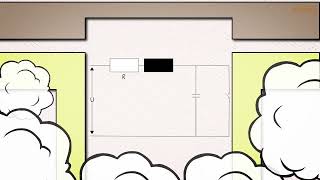
Ex e increased safety and Ex n
Hazcon
Lesson frames belong to the creators named in the Credits below and are shown from YouTube.
What you will learn
Explain how an explosion starts and how each protection concept prevents one; place a gas or dust in its group and choose a temperature class; read and question a hazardous area classification drawing; decode an ATEX or IECEx marking and match equipment to its zone; inspect and reassemble Ex d and Ex e equipment correctly, including obstruction distances and the tE check on Ex e motors; carry out an intrinsic safety entity calculation and find a loop's longest cable; select cable glands and stopping plugs; plan visual, close and detailed inspections to IEC 60079-17 and record and close the faults; and plan permits and gas testing for work in a classified area.
- Place a gas or dust in its group and choose a temperature class below its ignition temperature
- Read zones 0, 1, 2 and 20, 21, 22 and question a classification drawing
- Decode ATEX and IECEx markings and match the EPL to the zone
- Inspect Ex d flame paths and obstruction distances, and Ex e terminations and motors
- Do an intrinsic safety entity calculation and find a loop's longest cable
- Select cable glands and stopping plugs for Ex d, Ex e and Ex i entries
- Plan visual, close and detailed inspections to IEC 60079-17 and close out the faults
- Plan permits and gas testing for work in a classified area
The course project · about 8 hours
An intrinsically safe loop check for a zone 1 transmitter and a detailed inspection of three Ex devices
Act as the E&I inspector on a gas plant unit: verify that a pressure transmitter loop in zone 1 is intrinsically safe with a full entity calculation and its longest allowed cable, then carry out a detailed inspection of three Ex devices (a flameproof junction box, an increased safety motor terminal box and the IS transmitter), record what you find, and raise the faults as owned punch items. The sample pack shows each document for a fictional plant in Qatar.
Sample document pack, 5 documents, filled in for the scenario
- Test reportIntrinsic safety loop verification: PT-3107
- DatasheetEx register extract: unit 31 items due for detailed inspection
- ProcedureWork instruction: detailed inspection of Ex equipment in zone 1
- RegisterDetailed inspection checklist: JB-3101, P-3102A, PT-3107
- Punch listPunch list from the unit 31 detailed inspection
Read inside the course and download as a workbook. The project is optional practice, marked when you submit it; the certificate needs only the modules and the final assessment.
Course content
12 modules · 72 lessons · 15h 42m
In order, at whatever pace suits you. Each module ends with a practice task that builds on the last.
- 01Explosive atmospheres: the fire triangle, gas groups and temperature classes8 lessons39m
- 02Area classification: zones 0, 1, 2 and 20, 21, 2210 lessons1h 34m
- 03Making the classification drawings: sources, ventilation and extents4 lessons1h 12m
- 04EPLs, ATEX, IECEx and reading the marking plate11 lessons1h 1m
- 05Ex d flameproof: flame paths, gaps, glands and maintenance6 lessons1h 44m
- 06Ex e increased safety and Ex n3 lessons1h 48m
- 07Ex i intrinsic safety: barriers, isolators and the entity calculation7 lessons1h 58m
- 08Ex p, Ex m, Ex q, Ex t and non-electrical equipment5 lessons1h 48m
Requirements
- Who it is for
- Intermediate. For electrical and instrument technicians, engineers and inspectors, and diploma and engineering graduates heading for oil and gas, chemicals, pharmaceuticals or power. You should know basic circuits and Ohm's law; arithmetic with a calculator is enough.
- Software
- A spreadsheet (Excel, Google Sheets or LibreOffice Calc) for the entity calculator and the inspection checklists. Vendor intrinsic safety loop calculators are useful optional checks. What to download, and how
- Hardware
- None. Photographs of Ex equipment from your own plant make the inspection practice real, but the notes give worked examples for every task.
Software you need
What to download, where from, what it costs and how to install it. Every link goes to the maker's own site, never a mirror.
Nothing to install
A spreadsheet (Excel, Google Sheets or LibreOffice Calc) is enough for the entity calculator and the inspection checklists.
Optional
Useful, not needed to finish the course.
- 01Free
LibreOffice
The Document Foundation
- Runs on
- Windows 10 or 11, macOS 11 or newer (Intel or Apple silicon), Linux
- Account
- None needed
- Size
- up to 1.5 GB of disk space on Windows
LibreOffice is free, open-source software under the Mozilla Public License 2.0, for any use including business. Calc is its spreadsheet.
Steps
- 1.Open the LibreOffice download page.
- 2.Check the page has picked your operating system, then select Download.
- 3.Run the installer (administrator rights are needed on Windows).
- 4.Start LibreOffice Calc for spreadsheet work.
- 5.Save as .xlsx if you need to share files with Excel users.
- Choose the latest main version unless your organisation asks for the older, more conservative release.
Official download pagelibreoffice.org
Checked against each maker's own page on 27 September 2026. Trial lengths and editions change; the maker's page is the final word.
Hazardous Areas: Ex Equipment, Zones and Inspection at a glance
Hazardous Areas: Ex Equipment, Zones and Inspection is a free, self-paced online course from EDWartens for electrical and instrument technicians, engineers and Ex inspectors in oil and gas, chemicals and power, in India and the Gulf. It has 12 modules and 15h 42m of video lessons by BARTEC, Hazcon, IndEx - Ex Professionals and others, with written notes and worked problems, a practical project with a document pack and a 15-question final assessment (pass mark 60%). Learning is free with an account; an optional certificate with a public verification code is issued when you pass. Last updated 27 September 2026.
All course factsHide course facts
- Price
- ₹0, free for good. No trial, no card. Comparable classroom training of this length costs about ₹8,999.
- Who it is for
- Electrical and instrument technicians, engineers and Ex inspectors in oil and gas, chemicals and power, in India and the Gulf
- Format
- 12 self-paced modules, 15h 42m of video, written notes, a practice task per module and one final assessment.
- Level
- Intermediate. Intermediate. For electrical and instrument technicians, engineers and inspectors, and diploma and engineering graduates heading for oil and gas, chemicals, pharmaceuticals or power. You should know basic circuits and Ohm's law; arithmetic with a calculator is enough.
- Brand
- Vendor-neutral
- Software
- A spreadsheet (Excel, Google Sheets or LibreOffice Calc) for the entity calculator and the inspection checklists. Vendor intrinsic safety loop calculators are useful optional checks.
- Hardware
- None. Photographs of Ex equipment from your own plant make the inspection practice real, but the notes give worked examples for every task.
- Certificate
- Optional EDWartens Certificate of Completion, verifiable by code. Not a vendor credential.
- Video lessons by
- BARTEC, Hazcon, IndEx - Ex Professionals, Jon Hichens insightEx, Engineering Institute of Technology, GM International, The Reynolds Company, Phoenix Contact, R. STAHL, Beamex, eFunda Engineers, US Chemical Safety Board (independent creators, credited below)
- Language
- English
- Last updated
- 27 September 2026
A shareable EDWartens certificate
Finish every module and pass the final assessment, and the optional EDWartens certificate is yours. It carries a unique verification code on a public page anyone can check, so it stands up when a recruiter looks it up. See it below.
The course itself stays free whether or not you ever buy one.
Stuck? Ask a practising engineer
A free course usually means a comment section and hope. This one does not. Every module has an Ask-your-trainer panel that reaches the same engineers who teach our paid programme: people who commission panels for a living, not moderators.
Pairs well with
 PLC programming · FreeSiemens TIA PortalFrom zero electrical knowledge to a working, simulated S7-1200 program, for nothing.
 PLC programming · FreeSiemens TIA Portal in Three HoursThe first three hours of the Siemens TIA Portal course, cut to end on a win: what a PLC is, how it is wired, a project configured in TIA Portal, and your first ladder program running in simulation. Finish it in an evening or two, earn a certificate, and carry straight on into the full course.
 PLC programming · FreeTIA Portal: Build a MachineOne machine, start to finish. Take a bottle filling line from a written specification and an I/O list to a structured S7-1200 program with a fill station, a capper, a reject sorter and an operator screen with alarms, then test it against a written record and archive it for hand-over. The lessons are the reference; the machine is yours, and it is what you submit.
 Instrumentation · FreeInstrumentation for PLC EngineersThe half of the loop that is not code. Follow one measurement from the transmitter in the field, down the 4-20 mA loop, into the analog card, through NORM_X and SCALE_X into engineering units, out again to a valve, and back to the control room when the reading is wrong.
More free courses: Free instrumentation and process control courses · Free electrical design and control panel courses
Learner reviews
No reviews yet
Reviews here are written only by learners who have finished every module of Hazardous Areas: Ex Equipment, Zones and Inspection, and they are published exactly as written. Finish the course and yours will be the first.
Common questions
Who is this hazardous area course for?
Electrical and instrument technicians, engineers and inspectors, and diploma and engineering graduates heading for oil and gas, chemicals, pharmaceuticals or power plants, in India, the Gulf and elsewhere. You should know basic circuits and Ohm's law; no hazardous area experience is needed.
Does this course prepare me for CompEx?
It covers the knowledge base of CompEx units Ex01 to Ex04 (installing and inspecting Ex d, e, n, p and i equipment in gas atmospheres) and prepares you for that kind of assessment. It is not CompEx training and does not award a CompEx certificate: CompEx and IECEx are third-party schemes, and only their approved centres can assess and certify you.
Which standards does it follow?
The IEC 60079 series: 60079-10-1 and 60079-10-2 for classification, 60079-0 and the protection-type parts for equipment, 60079-14 for installation, 60079-17 for inspection and 60079-19 for repair, plus the ATEX directives and the IECEx scheme. Standards are paraphrased, never reproduced.
Do I need any software or equipment?
No. A spreadsheet is enough for the entity calculator and the inspection checklists. Photographs of real Ex equipment make the inspection practice more realistic, but the notes give every value you need.
How long does the Hazardous Areas: Ex Equipment, Zones and Inspection course take?
About 23 hours of video lessons, notes and practice at your own pace; the videos alone are about 15.7 hours. The optional project, an intrinsic safety loop check and a detailed inspection of three Ex devices, takes about 8 hours more.
Is the course free to learn?
Yes. Every module, the notes, the project and the final assessment are free. The only paid item is the certificate, if you want it.
What certificate does the Hazardous Areas: Ex Equipment, Zones and Inspection course give?
An EDWartens Certificate of Completion, issued when you pass the final assessment, with a number anyone can verify on our site. It is a certificate of completion, not a CompEx, IECEx or ATEX competence certificate.
What jobs does it lead to?
E&I technician, Ex inspector, instrument and electrical maintenance and commissioning roles in oil and gas, refineries, petrochemicals and gas processing, including the many Gulf roles that ask for hazardous area knowledge. Go on to Safety Instrumented Systems and SIL to IEC 61511, or Instrument Calibration, Loop Checks and Commissioning.
Is the Hazardous Areas: Ex Equipment, Zones and Inspection course free in India, and what does the certificate cost?
Yes. Learning costs ₹0 in India: every module, the written notes, the practice tasks and the final assessment, with no card and no trial period. The only paid item is the optional EDWartens Certificate of Completion, ₹559 including GST for this intermediate course, paid in rupees through Razorpay, and only if you want it after passing the final assessment.
Is there classroom instrumentation training in India as well?
Yes. EDWartens India runs the Automation Engineer Program (AEP), a classroom programme at its Electronic City centre in Bangalore with hands-on PLC, SCADA, HMI and drives hardware. This free course is separate and fully online; it is a good way to try the subject before deciding on classroom training. Details are at edwartens.co.in/courses/aep.
What you walk away with
Your certificate for Hazardous Areas: Ex Equipment, Zones and Inspection
Finish the course, pass the final, and this is the document with your name on it.

Verifiable by anyone
Adds to LinkedIn in one click
QR code on the certificate
Names what you can do
A permanent link
Earned, not attended
Learning is free. The certificate is optional.
Add it now and pay only when you have finished the course, or come back for it later. One-off, US$28.99, with a receipt.
Issued by EDWartens India (Wartens Automation Private Limited) as a Certificate of Completion for this self-paced course. It is not a vendor certification, a university award or a CPD-accredited activity, and it does not certify competence on live equipment. Delivered electronically; see the refund policy.
Credits
Who made the video lessons
The video lessons in this course were created by the people below, not by EDWartens. Every lesson streams from its creator's own YouTube channel; EDWartens neither hosts nor sells that footage, and the creators are not affiliated with EDWartens and do not endorse this course. What EDWartens wrote is the study plan, the notes, the practice tasks and the assessments.
- BARTECthe ExPP explosion protection awareness series: explosive atmospheres, explosion prevention, the fire triangle, area classification, protection concepts, gas groups, temperature codes, marking strings, roles, personnel competence, regulators and standards, certification, and IEC 60079-14 design, inspection, maintenance and testing; plus two short explosion protection basics lessons used in the final review
- Hazconthe short lessons on zones 0, 1, 2, 20, 21 and 22, class and division against zones, dust atmospheres, temperature class against auto-ignition temperature, IECEx and reading IECEx markings, explosion proof against flameproof, pressure piling, Ex e, Ex p, intrinsic safety and IS grounding, and non-electrical equipment
- IndEx - Ex Professionalsthe long webinars: Ex d in depth, Ex n parts 1 and 2, Ex q, Ex t, ingress protection, IP washers and glands, and Ex industry myths; the Aragas hazardous area classification webinars; and the Ex d test clips
- Jon Hichens insightExshort lessons on T classes, IECEx, ATEX, flameproof Ex d, Ex m, cold flow in cables, the Annex C test and the 2024 installation standard
- Engineering Institute of Technologythe hour-long introduction to hazardous areas and their classification
- eFunda Engineersdesigning hazardous area classification drawings
- Sigma-HSEthe short overview of hazardous area classification
- eFIXXATEX fundamentals for electrical installations
- GM Internationalthe webinar comparing zener barriers and IS isolators
- The Reynolds Companythe TechTalk on intrinsic safety barriers, signal conditioners and entity parameters
- Phoenix Contact USAthe principle of intrinsic safety
- R. STAHLfrequently asked questions on intrinsically safe loops
- Beamexrunning ATEX and IEC 60079 maintenance inspections from a mobile device
- US Chemical Safety Board (USCSB)the safety video on the dangers of hot work
- Will On Safetythe introduction to permit to work systems
- HSE Insightspermit issuer and permit receiver responsibilities
- Forensics Detectorswhat a bump test on a gas detector is
If you are one of these creators and would like a lesson removed or credited differently, write to info@wartens.com.