

Maintenance · Free online course
Cathodic Protection and Corrosion Control for Pipelines and Tanks
Learn how cathodic protection keeps buried and submerged steel from corroding on oil and gas pipelines and tank farms: the corrosion cell, soil resistivity, coatings as the first line, galvanic anodes, impressed current with transformer-rectifiers and groundbeds, the -850 mV and 100 mV criteria, reference electrodes, IR drop, test posts, CIPS and DCVG surveys, tank bottom CP, stray current, AC corrosion and the monthly records.
- 9 modules
- About 2 hours of lessons
- Beginner
- English
- ₹0, free

₹0Free for good
Worth ₹1,999 by length and depth against classroom training. It has always been free; that is not a former price.
No card. Checkout takes a minute and gives you a receipt.
Certificate ₹959, optional. The course is free either way.
Overview
About Cathodic Protection and Corrosion Control for Pipelines and Tanks
Protect buried and submerged steel: corrosion cells, coatings, anodes, rectifiers, criteria, surveys, tank bottoms and records.
Cathodic Protection and Corrosion Control for Pipelines and Tanks is a free, self-paced online course from EDWartens for mechanical, chemical, electrical and metallurgy graduates, plant technicians and inspectors moving into corrosion control and cathodic protection work on oil and gas pipelines, storage tanks and terminals. It has 9 modules and takes about 2 hours of lessons and practice, plus about 2 hours of optional video, with written notes, a practice task per module, a practical project and a final assessment of 15 questions (pass mark 60%). Learning costs nothing and needs only a free account. The optional EDWartens Certificate of Completion, verifiable by code, is a one-off ₹959 inclusive of GST for learners in India; it is not a vendor credential. Updated 28 November 2026.
Who it is for: Mechanical, chemical, electrical and metallurgy graduates, plant technicians and inspectors moving into corrosion control and cathodic protection work on oil and gas pipelines, storage tanks and terminals
This course includes
- About 2 hours of lessons and practice, plus about 2 hours of optional video
- 9 modules with written notes and diagrams
- One final assessment: 15 questions, pass mark 60%
- Ask-an-engineer support from practising engineers
- Lifetime access, the course does not expire
- Optional verifiable certificate when you finish
- Step 1 of 3
Learn the 9 modules
About 2 hours of lessons and practice, plus about 2 hours of optional video, with written notes and a practice task per module, at your own pace.
- Step 2 of 3
Pass the final assessment
15 questions drawn from every module, pass mark 60%, 3 attempts.
- Step 3 of 3
Take the certificate, if you want it
Optional, paid once, only if you choose it. The course stays free either way.
See the certificate and its price
A look inside


From the lessons

How corrosion cells work, and why soil matters
by KINETIC SCHOOL

Corrosion control options: coatings first, CP as backup
by The Institute for Oil & Gas Sector (IOGS)

Cathodic protection principles: galvanic and impressed current
by Corrosion Technologies

Galvanic anode systems
by Corrosion Coach

Impressed current: transformer-rectifiers and groundbeds
by CorrConnect
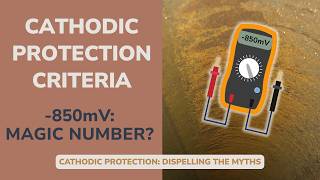
Criteria, pipe-to-soil potentials, reference electrodes and IR drop
by isiFundi Training
Lesson frames belong to the creators named in the Credits and are shown from YouTube.
What you learn
What you will be able to do
By the end you will be able to:
- Explain the corrosion cell and measure soil resistivity with the Wenner method
- Tell galvanic and impressed current systems apart and size each with simple sums
- Judge potentials against the instant-off criterion and convert between electrodes
- Describe test posts, CIPS, DCVG and tank bottom surveys
- Explain stray current and AC corrosion and keep auditable CP records
How it works
How this course works
Watch the lessons
Short video lessons, one module at a time, at your own pace.
Read the notes
Open the Reading tab for the written notes and diagrams of the module.
Check yourself
Answer the questions to see what stuck before you move on.
Final assessment
Pass the final once you have been through the modules.
Certificate, if you want oneOptional
Optional, with a page anyone can use to verify it.
Syllabus
Course content, module by module
In order, at whatever pace suits you. Each module ends with a practice task that builds on the last.
- Modules
- 9
- Optional videos
- 22
- Lessons and practice
- 2 hours
- Final questions
- 15
- 01
How corrosion cells work, and why soil matters
3 optional videos · 9m - 02
Corrosion control options: coatings first, CP as backup
2 optional videos · 12m - 03
Cathodic protection principles: galvanic and impressed current
2 optional videos · 7m - 04
Galvanic anode systems
3 optional videos · 19m - 05
Impressed current: transformer-rectifiers and groundbeds
4 optional videos · 27m - 06
Criteria, pipe-to-soil potentials, reference electrodes and IR drop
3 optional videos · 29m - 07
Test posts and surveys: CIPS, DCVG and tank bottoms
3 optional videos · 17m - 08
Interference, AC corrosion and records
2 optional videos · 8m Final assessment · 15 questions, pass mark 60%
Project
The course project
Optional practice that ends in the kind of job the course prepares you for, with the documents that go with it.
About 4 hours
Annual CP survey report and rectifier log review for an export line and a tank
Act as the CP technician for a crude oil terminal. Judge ten test post readings against the criterion. Work out the AC current density where a power line runs alongside. Trend a rectifier's monthly log and judge a tank bottom. Write the findings into one survey report.
- 5documents in the pack
- 7steps to follow
- 6things to hand in
- 4 hof work, at your pace
Sample document pack, 5 documents, filled in for the scenario
- DatasheetCP system data sheet, export line EL-16 (training example)
- RegisterAnnual survey register, test posts TP1 to TP10
- RegisterRectifier log, TR-1, January to June
- Test reportTank T-105 bottom, potential readings
- Test reportCalculation sheet format (training example), export line EL-9, post TP4
Read inside the course and download as a workbook. The project is optional practice, marked when you submit it; the certificate needs only the modules and the final assessment.
Tools
Software, hardware and lessons
Software
A spreadsheet (LibreOffice Calc is free) for resistivity, anode life, rectifier and survey calculations. Nothing else is needed.
Hardware
None. If you can borrow a high-impedance multimeter and a copper/copper sulphate reference electrode at work, the practice is better for it, but every task can be done on paper.
Who it is for
Beginner to intermediate. For mechanical, chemical, electrical and metallurgy diploma and degree graduates, plant technicians and inspectors moving into corrosion and cathodic protection work on pipelines and tank farms. You should know what a pipeline and a storage tank are and how Ohm's law works; no corrosion experience is needed.
Video lessons by
- KINETIC SCHOOL
- M. C. Miller Co.
- Cathodic Academy
- The Institute for Oil & Gas Sector (IOGS)
- Interesting Chemistry
- Corrosion Technologies
- Corrosion Coach
- Electrical Instrumentation & Cathodic Protection
- TOE Academy
- CorrConnect
- MATCOR
- isiFundi Training
- Cena Technical Limited
- Corroconsult UK Limited
- Jorge Goldin
- Allied Corrosion Industries, Inc.
Independent creators, credited in full under Credits.
Software you need
What to download, where from, what it costs and how to install it. Every link goes to the maker's own site, never a mirror.
Nothing to install
A spreadsheet is enough for the resistivity, anode life, rectifier and survey calculations and the CP records. If you can borrow a high-impedance multimeter and a copper/copper sulphate electrode at work, the practice is better for it, but every task can be done on paper.
Optional
Useful, not needed to finish the course.
- 01Free
LibreOffice
The Document Foundation
- Runs on
- Windows 10 or 11, macOS 11 or newer (Intel or Apple silicon), Linux
- Account
- None needed
- Size
- up to 1.5 GB of disk space on Windows
LibreOffice is free, open-source software under the Mozilla Public License 2.0, for any use including business. Calc is its spreadsheet.
Steps
- 1.Open the LibreOffice download page.
- 2.Check the page has picked your operating system, then select Download.
- 3.Run the installer (administrator rights are needed on Windows).
- 4.Start LibreOffice Calc for spreadsheet work.
- 5.Save as .xlsx if you need to share files with Excel users.
- Choose the latest main version unless your organisation asks for the older, more conservative release.
Official download pagelibreoffice.org
Checked against each maker's own page on 27 September 2026. Trial lengths and editions change; the maker's page is the final word.
What you walk away with
Your certificate for Cathodic Protection and Corrosion Control for Pipelines and Tanks
Finish the course, pass the final, and this is the document with your name on it.

Verifiable by anyone
Adds to LinkedIn in one click
QR code on the certificate
Names what you can do
A permanent link
Earned, not attended
Learning is free. The certificate is optional.
Add it now and pay only when you have finished the course, or come back for it later. One-off, US$26.49, with a receipt.
Issued by Wartens Ltd (England and Wales, company no. 15262249) through the EDWartens training portal, as a Certificate of Completion for this self-paced course. Sold in India by Wartens Automation Private Limited. It is not a vendor certification, a university award or a CPD-accredited activity, and it does not certify competence on live equipment. Delivered electronically; see the refund policy.
Why learn with EDWartens
What you get with this course.
- Free from the first lesson to the final assessment.
- Video lessons with written notes and a project.
- An optional certificate that anyone can verify online.
FAQ
Common questions
Who is this cathodic protection course for?
It is for mechanical, chemical, electrical and metallurgy graduates, plant technicians and inspectors who want to move into corrosion and CP work on pipelines and tank farms. You should know what a pipeline and a storage tank are and how Ohm's law works. No corrosion experience is needed.
Is the course free to learn?
Yes. Every module, the notes, the worked calculations, the project and the final assessment are free. The only software you need is a free spreadsheet. The certificate is optional.
Which standards does it use?
It teaches the ideas of the main references in its own words. Examples are ISO 15589-1 for onshore pipelines, ISO 21809 for pipeline coatings and API 651 for tank bottoms. Limits differ between editions and projects. Use the current edition and your project specification.
Does this course give an official cathodic protection certification?
No. It covers much of the body of knowledge behind CP technician and tester work, with the calculations done by hand. It is not an AMPP, NACE or other certification, and it does not replace their exams. You get an EDWartens Certificate of Completion.
What certificate does the Cathodic Protection and Corrosion Control course give?
An EDWartens Certificate of Completion, issued when you finish the modules and pass the 15-question final at 60 percent. It has a number anyone can verify on our site. It is not an official CP grade.
Will it let me sign off cathodic protection work on a plant?
No. Sign-off comes from the asset owner and from the qualification it requires. This course teaches you to read, calculate and report so you can work well with CP technicians and corrosion engineers.
How long does the Cathodic Protection and Corrosion Control course take?
The lessons and practice take about 2 hours. The video is optional: about 2 more hours if you watch all of it. The optional project takes about 4 hours more.
What is the project in the Cathodic Protection and Corrosion Control course?
You act as the CP technician for a crude oil export terminal. You judge ten test post readings, work out AC current density under a power line, trend a rectifier log, judge a tank bottom and write the findings into a survey report.
Is the Cathodic Protection and Corrosion Control course free in India, and what does the certificate cost?
Yes. Learning costs ₹0 in India: every module, the written notes, the practice tasks and the final assessment, with no card and no trial period. The only paid item is the optional EDWartens Certificate of Completion, ₹959 including GST for this beginner course, paid in rupees through Razorpay, and only if you want it after passing the final assessment.
What topics does the Cathodic Protection and Corrosion Control course cover, module by module?
The Cathodic Protection and Corrosion Control course has 9 modules. It opens with "How corrosion cells work, and why soil matters", goes through "Corrosion control options: coatings first, CP as backup", "Galvanic anode systems", "Criteria, pipe-to-soil potentials, reference electrodes and IR drop" and "Interference, AC corrosion and records" and ends with "Final Assessment". The full list with minutes is under "What you learn" on this page.
What can I do after the Cathodic Protection and Corrosion Control course?
After the Cathodic Protection and Corrosion Control course: Name the four parts of a corrosion cell, find where cells form on pipes and tank bottoms and measure soil resistivity with the Wenner method; Put coatings, cathodic protection, inhibitors and materials in order and explain holidays, disbondment and shielding; Tell galvanic anode and impressed current systems apart and calculate a current demand from area, coating breakdown and current density. These are the practical outcomes the course is written around, and the final assessment of 15 questions checks them.
What software and hardware do I need for the Cathodic Protection and Corrosion Control course, and does it cost anything?
For the Cathodic Protection and Corrosion Control course, software: A spreadsheet (LibreOffice Calc is free) for resistivity, anode life, rectifier and survey calculations. Nothing else is needed. Hardware: none. If you can borrow a high-impedance multimeter and a copper/copper sulphate reference electrode at work, the practice is better for it, but every task can be done on paper. The course itself is free.
Is the Cathodic Protection and Corrosion Control course suitable for me, and what level is it?
Cathodic Protection and Corrosion Control is rated beginner. Beginner to intermediate. For mechanical, chemical, electrical and metallurgy diploma and degree graduates, plant technicians and inspectors moving into corrosion and cathodic protection work on pipelines and tank farms. You should know what a pipeline and a storage tank are and how Ohm's law works; no corrosion experience is needed. It is written for mechanical, chemical, electrical and metallurgy graduates, plant technicians and inspectors moving into corrosion control and cathodic protection work on oil and gas pipelines, storage tanks and terminals, and takes about 2 hours of lessons and practice, plus about 2 hours of optional video, at your own pace.
Which jobs use the skills from the Cathodic Protection and Corrosion Control course?
Skills from the Cathodic Protection and Corrosion Control course (for example: name the four parts of a corrosion cell, find where cells form on pipes and tank bottoms and measure soil resistivity with the Wenner method) are used in CP technician work. The course gives you practical evidence of the skill; it does not promise a job, and employers decide on experience and interview.
All course factsHide course facts
- Price
- ₹0, free for good. No trial, no card. Comparable classroom training of this length costs about ₹1,999.
- Who it is for
- Mechanical, chemical, electrical and metallurgy graduates, plant technicians and inspectors moving into corrosion control and cathodic protection work on oil and gas pipelines, storage tanks and terminals
- Format
- 9 self-paced modules, about 2 hours of lessons and practice, plus about 2 hours of optional video, written notes, a practice task per module and one final assessment.
- Level
- Beginner. Beginner to intermediate. For mechanical, chemical, electrical and metallurgy diploma and degree graduates, plant technicians and inspectors moving into corrosion and cathodic protection work on pipelines and tank farms. You should know what a pipeline and a storage tank are and how Ohm's law works; no corrosion experience is needed.
- Brand
- Vendor-neutral
- Software
- A spreadsheet (LibreOffice Calc is free) for resistivity, anode life, rectifier and survey calculations. Nothing else is needed.
- Hardware
- None. If you can borrow a high-impedance multimeter and a copper/copper sulphate reference electrode at work, the practice is better for it, but every task can be done on paper.
- Certificate
- Optional EDWartens Certificate of Completion, ₹959 inclusive of GST for learners in India, verifiable by code. Not a vendor credential.
- Video lessons by
- KINETIC SCHOOL, M. C. Miller Co., Cathodic Academy, The Institute for Oil & Gas Sector (IOGS), Interesting Chemistry, Corrosion Technologies, Corrosion Coach, Electrical Instrumentation & Cathodic Protection, TOE Academy, CorrConnect, MATCOR, isiFundi Training, Cena Technical Limited, Corroconsult UK Limited, Jorge Goldin, Allied Corrosion Industries, Inc. (independent creators, credited below)
- Language
- English
- Last updated
- 28 November 2026
Pairs well with
 PLC programming · FreeSiemens TIA Portal
 PLC programming · FreeSiemens TIA Portal in Three Hours
 PLC programming · FreeTIA Portal: Build a Machine
 Instrumentation · FreeInstrumentation for PLC Engineers
More free courses: Free maintenance and reliability courses
Classroom course, Bangalore
PLC training in Bangalore
The Automation Engineer Program (AEP) is our classroom course in PLC programming and industrial automation, taught in person at our Electronic City centre.
Credits
Who made the video lessons
The video lessons in this course were created by the people below, not by EDWartens. Every lesson streams from its creator's own YouTube channel; EDWartens neither hosts nor sells that footage, and the creators are not affiliated with EDWartens and do not endorse this course. What EDWartens wrote is the study plan, the notes, the practice tasks and the assessments.
- KINETIC SCHOOLthe corrosion cell as an animation
- M. C. Miller Co.a four-pin Wenner soil resistivity test in the field
- Cathodic Academyturning a Wenner resistance reading into soil resistivity
- The Institute for Oil & Gas Sector (IOGS)how fusion bonded epoxy is applied to pipe and inspected
- Interesting Chemistryhow corrosion inhibitors protect oil and gas pipelines from inside
- Corrosion Technologieswhat cathodic protection is and the two ways of supplying current
- Corrosion Coachthe practical galvanic series and galvanic cathodic protection of steel
- Electrical Instrumentation & Cathodic ProtectionFaraday's law and converting between reference electrode scales
- TOE Academysizing and placing sacrificial anodes on an offshore structure
- CorrConnectan impressed current system and measurements on a rectifier
- MATCORmixed metal oxide anodes for cathodic protection
- isiFundi TrainingOhm's law on CP circuits, the -850 mV criterion and the close interval survey
- Cena Technical Limitedinstant ON and instant OFF potential measurement with an interrupter
- Corroconsult UK Limitedfinding, centring and measuring a coating defect in a DCVG survey
- Ducorr Mediainstalling cathodic protection under an aboveground storage tank
- Allied Corrosion Industries, Inc.DC stray current corrosion and AC interference on pipelines
If you are one of these creators and would like a lesson removed or credited differently, write to info@edwartens.co.in.