Building automation · Free online course
Data Centre Cooling, BMS and DCIM
How data centres are cooled, controlled and run: hot and cold aisles, CRAC and CRAH units, chilled water plant, economisers, liquid and immersion cooling for AI racks, cooling redundancy and continuous cooling, BMS design, DCIM and operations, and PUE, WUE and CUE. Built on MEP Academy, TEQNYAT and Bryce Anderson lessons.
- 9 modules
- 3h 46m of video
- Intermediate
- English
- ₹0, free

₹0Free for good
Worth ₹2,999 by length and depth against classroom training. It has always been free; that is not a former price.
No card. Checkout takes a minute and gives you a receipt.
Overview
About Data Centre Cooling, BMS and DCIM
How data centres are cooled, controlled and run: hot and cold aisles, CRAC and CRAH units, chilled water plant, economisers, liquid and immersion cooling for AI racks, cooling redundancy and continuous cooling, BMS design, DCIM and operations, and PUE, WUE and CUE. Built on MEP Academy, TEQNYAT and Bryce Anderson lessons.
Data Centre Cooling, BMS and DCIM is a free, self-paced online course from EDWartens for HVAC, BMS and facility engineers working in or moving into data centres. It has 9 modules and 3h 46m of video lessons by TEQNYAT, MEP Academy, Bryce Anderson, with written notes and worked problems, a practical project with a document pack and a 15-question final assessment (pass mark 60%). Learning is free with an account; an optional certificate with a public verification code is issued when you pass. Last updated 27 September 2026.
Who it is for: HVAC, BMS and facility engineers working in or moving into data centres
This course includes
- 3h 46m of video lessons
- 9 modules with written notes and diagrams
- One final assessment: 15 questions, pass mark 60%
- Ask-an-engineer support from practising engineers
- Lifetime access, the course does not expire
- Optional verifiable certificate when you finish
- Step 1 of 3
Learn the 9 modules
3h 46m of video lessons, written notes and a practice task per module, at your own pace.
- Step 2 of 3
Pass the final assessment
15 questions drawn from every module, pass mark 60%, 3 attempts.
- Step 3 of 3
Take the certificate, if you want it
Optional, paid once, only if you choose it. The course stays free either way.
See the certificate and its price
A look inside


From the lessons

How a data centre is cooled
by MEP Academy

CRAC, CRAH and chilled water
by MEP Academy
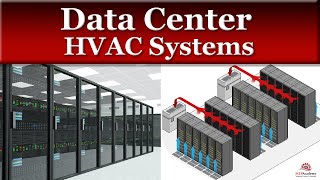
Data centre HVAC in depth
by MEP Academy

Liquid and immersion cooling for AI
by MEP Academy

Designing the power and cooling infrastructure
by TEQNYAT

BMS for data centres
by Bryce Anderson
Lesson frames belong to the creators named in the Credits and are shown from YouTube.
What you learn
What you will be able to do
Trace the heat path from chip to atmosphere and calculate the airflow and water flow a load needs; compare CRAC and CRAH units, air- and water-cooled plant, and containment options; explain economisers and chiller efficiency in COP and kW per ton; describe direct-to-chip, rear-door and immersion cooling for AI racks; size cooling units with redundancy and plan continuous cooling through a power failure; design BMS points, controllers and alarms that survive a single failure; use DCIM for capacity and change; and report PUE, WUE and CUE.
- Trace the heat path and calculate the airflow and water flow a load needs
- Compare CRAC and CRAH units, containment options and air- and water-cooled plant
- Explain economisers and calculate chiller COP and kW per ton
- Describe direct-to-chip, rear-door and immersion cooling for AI racks
- Size cooling with N+1 and plan continuous cooling through a power failure
- Design a BMS that survives a single controller failure, with points and alarms
- Use DCIM to find the limiting resource and stranded capacity
- Calculate PUE, WUE and CUE and explain what each misses
Syllabus
Course content, module by module
In order, at whatever pace suits you. Each module ends with a practice task that builds on the last.
- Modules
- 9
- Video lessons
- 21
- Of video
- 3h 46m
- Final questions
- 15
- 01
How a data centre is cooled
2 lessons · 14m - 02
CRAC, CRAH and chilled water
3 lessons · 22m - 03
Data centre HVAC in depth
2 lessons · 26m - 04
Liquid and immersion cooling for AI
2 lessons · 18m - 05
Designing the power and cooling infrastructure
4 lessons · 42m - 06
BMS for data centres
2 lessons · 29m - 07
DCIM, operations and management
2 lessons · 28m - 08
Sustainability, and what comes next
3 lessons · 36m Final assessment · 15 questions, pass mark 60%
Project
The course project
Optional practice that ends in the kind of job the course prepares you for, with the documents that go with it.
About 10 hours
Preparing a colocation data hall for AI racks: cooling design basis, BMS points and alarms, integrated cooling test and capacity report
Act as the mechanical and controls engineer preparing an existing data hall to take liquid-cooled AI racks alongside its air-cooled customers. Write the cooling design basis with the heat load and redundancy, build the BMS points list and alarm list, write the integrated cooling test, and report capacity and efficiency. The sample pack shows each document for a colocation hall in Singapore.
Sample document pack, 5 documents, filled in for the scenario
- PlanCooling design basis: Data Hall 3 AI row
- Points listBMS points list: Data Hall 3 AI row
- Alarm listAlarm list: Data Hall 3 AI row cooling
- SATIntegrated cooling site acceptance test: AI row
- ReportCapacity and efficiency report: Data Hall 3 after the AI row
Read inside the course and download as a workbook. The project is optional practice, marked when you submit it; the certificate needs only the modules and the final assessment.
Tools
Software, hardware and lessons
Software
None required. A spreadsheet for the calculations.
Hardware
None.
Who it is for
Intermediate. You should know basic HVAC or building services: temperature, airflow, heat and power. No data centre experience is needed.
Video lessons by
- TEQNYAT
- MEP Academy
- Bryce Anderson
Independent creators, credited in full under Credits.
Software you need
What to download, where from, what it costs and how to install it. Every link goes to the maker's own site, never a mirror.
Nothing to install
Any spreadsheet (Excel, Google Sheets or LibreOffice Calc) is enough for the calculations.
Optional
Useful, not needed to finish the course.
- 01Free
LibreOffice
The Document Foundation
- Runs on
- Windows 10 or 11, macOS 11 or newer (Intel or Apple silicon), Linux
- Account
- None needed
- Size
- up to 1.5 GB of disk space on Windows
LibreOffice is free, open-source software under the Mozilla Public License 2.0, for any use including business. Calc is its spreadsheet.
Steps
- 1.Open the LibreOffice download page.
- 2.Check the page has picked your operating system, then select Download.
- 3.Run the installer (administrator rights are needed on Windows).
- 4.Start LibreOffice Calc for spreadsheet work.
- 5.Save as .xlsx if you need to share files with Excel users.
- Choose the latest main version unless your organisation asks for the older, more conservative release.
Official download pagelibreoffice.org
Checked against each maker's own page on 27 September 2026. Trial lengths and editions change; the maker's page is the final word.
What you walk away with
Your certificate for Data Centre Cooling, BMS and DCIM
Finish the course, pass the final, and this is the document with your name on it.

Verifiable by anyone
Adds to LinkedIn in one click
QR code on the certificate
Names what you can do
A permanent link
Earned, not attended
Learning is free. The certificate is optional.
Add it now and pay only when you have finished the course, or come back for it later. One-off, US$28.99, with a receipt.
Issued by EDWartens India (Wartens Automation Private Limited) as a Certificate of Completion for this self-paced course. It is not a vendor certification, a university award or a CPD-accredited activity, and it does not certify competence on live equipment. Delivered electronically; see the refund policy.
FAQ
Common questions
Who is the Data Centre Cooling, BMS and DCIM course for?
HVAC, mechanical, controls and facilities engineers moving into data centres, and data centre technicians who want to understand the cooling and BMS behind their daily work. Basic HVAC knowledge is assumed.
How is it different from Data Centre Electrical and Critical Power?
That course covers the electrical side: power paths, UPS, generators and electrical studies. This one covers cooling, BMS, DCIM and sustainability. Together they cover the two halves of data centre infrastructure.
Does it cover liquid cooling for AI?
Yes. A full module covers direct-to-chip cold plates, CDUs, rear-door heat exchangers and single- and two-phase immersion, with the flow calculations.
How long does the Data Centre Cooling, BMS and DCIM course take?
About 6.7 hours of video lessons across eight teaching modules, plus the notes, practice questions, the final assessment and an optional project of around 10 hours. At a few hours a week it fits into three to four weeks.
What is the project in the Data Centre Cooling, BMS and DCIM course?
You prepare a colocation data hall in Singapore for five 80 kW liquid-cooled AI racks: a cooling design basis, a BMS points list and alarm list, an integrated cooling acceptance test, and a capacity and efficiency report. A worked sample pack shows each document.
Do I need DCIM or BMS software?
No. The course explains what they do and how they are designed; the exercises use a spreadsheet.
Is the Data Centre Cooling, BMS and DCIM course really free?
Yes. Every module, the notes, the project and the final assessment. The only paid item is the certificate, if you want it.
What certificate does the Data Centre Cooling, BMS and DCIM course give?
An EDWartens Certificate of Completion, issued when you pass the final assessment, with a number anyone can verify on our site. It is not a vendor or Uptime Institute certification, and EDWartens is not affiliated with either.
Is the Data Centre Cooling, BMS and DCIM course free in India, and what does the certificate cost?
Yes. Learning costs ₹0 in India: every module, the written notes, the practice tasks and the final assessment, with no card and no trial period. The only paid item is the optional EDWartens Certificate of Completion, ₹599 including GST for this intermediate course, paid in rupees through Razorpay, and only if you want it after passing the final assessment.
All course factsHide course facts
- Price
- ₹0, free for good. No trial, no card. Comparable classroom training of this length costs about ₹2,999.
- Who it is for
- HVAC, BMS and facility engineers working in or moving into data centres
- Format
- 9 self-paced modules, 3h 46m of video, written notes, a practice task per module and one final assessment.
- Level
- Intermediate. Intermediate. You should know basic HVAC or building services: temperature, airflow, heat and power. No data centre experience is needed.
- Brand
- Vendor-neutral
- Software
- None required. A spreadsheet for the calculations.
- Hardware
- None.
- Certificate
- Optional EDWartens Certificate of Completion, verifiable by code. Not a vendor credential.
- Video lessons by
- TEQNYAT, MEP Academy, Bryce Anderson (independent creators, credited below)
- Language
- English
- Last updated
- 27 September 2026
Pairs well with
 PLC programming · FreeSiemens TIA Portal
 PLC programming · FreeSiemens TIA Portal in Three Hours
 PLC programming · FreeTIA Portal: Build a Machine
 Instrumentation · FreeInstrumentation for PLC Engineers
More free courses: Free BMS and building automation courses · Free data centre courses
Classroom course, Bangalore
PLC training in Bangalore
The Automation Engineer Program (AEP) is our classroom course in PLC programming and industrial automation, taught in person at our Electronic City centre.
Credits
Who made the video lessons
The video lessons in this course were created by the people below, not by EDWartens. Every lesson streams from its creator's own YouTube channel; EDWartens neither hosts nor sells that footage, and the creators are not affiliated with EDWartens and do not endorse this course. What EDWartens wrote is the study plan, the notes, the practice tasks and the assessments.
- TEQNYATthe Datacenter Design & Operations Course episodes on power and cooling infrastructure, data centre management and operations, sustainability and green data centres, and emerging trends
- MEP Academythe explainers on data centre cooling methods, hot and cold aisle containment, CRAC and CRAH units, chilled water systems, air- and water-cooled plant, data centre HVAC, refrigerant economisers, liquid cooling for AI and immersion cooling
- Bryce Andersonthe BMS design lessons for data centres: N+1 controller design, power and alarms
If you are one of these creators and would like a lesson removed or credited differently, write to info@wartens.com.