

Quality management · Free online course
MEP QA/QC Engineer: HVAC, Plumbing, Fire and Electrical Site Inspection
Inspect mechanical, electrical and plumbing work the way a Gulf or UK building project expects: the MEP QA/QC engineer's role, quality plan, ITPs, WIR and MIR, material receiving inspection, HVAC ductwork and duct leakage tests, chilled-water and refrigerant pipe tests and flushing, plumbing and drainage tests, fire fighting and fire alarm checks, electrical containment, insulation resistance and earthing tests, witnessed testing and commissioning, snag lists and NCRs.
- 9 modules
- About 2 hours of lessons
- Beginner
- English
- ₹0, free

₹0Free for good
Worth ₹1,999 by length and depth against classroom training. It has always been free; that is not a former price.
No card. Checkout takes a minute and gives you a receipt.
Certificate ₹959, optional. The course is free either way.
Overview
About MEP QA/QC Engineer: HVAC, Plumbing, Fire and Electrical Site Inspection
Learn the work of an MEP QA/QC engineer: ITPs, WIR and MIR, duct, pipe, drain and electrical tests, snags and NCRs.
MEP QA/QC Engineer: HVAC, Plumbing, Fire and Electrical Site Inspection is a free, self-paced online course from EDWartens for mechanical and electrical diploma and degree graduates, site engineers, supervisors and technicians moving into MEP QA/QC on building projects. It has 9 modules and takes about 2 hours of lessons and practice, plus about 2.5 hours of optional video, with written notes, a practice task per module, a practical project and a final assessment of 15 questions (pass mark 60%). Learning costs nothing and needs only a free account. The optional EDWartens Certificate of Completion, verifiable by code, is a one-off ₹959 inclusive of GST for learners in India; it is not a vendor credential. Updated 28 November 2026.
Who it is for: Mechanical and electrical diploma and degree graduates, site engineers, supervisors and technicians moving into MEP QA/QC on building projects
This course includes
- About 2 hours of lessons and practice, plus about 2.5 hours of optional video
- 9 modules with written notes and diagrams
- One final assessment: 15 questions, pass mark 60%
- Ask-an-engineer support from practising engineers
- Lifetime access, the course does not expire
- Optional verifiable certificate when you finish
- Step 1 of 3
Learn the 9 modules
About 2 hours of lessons and practice, plus about 2.5 hours of optional video, with written notes and a practice task per module, at your own pace.
- Step 2 of 3
Pass the final assessment
15 questions drawn from every module, pass mark 60%, 3 attempts.
- Step 3 of 3
Take the certificate, if you want it
Optional, paid once, only if you choose it. The course stays free either way.
See the certificate and its price
A look inside


From the lessons

The MEP QA/QC engineer, quality plan, ITPs, WIR and MIR
by QualityEngineers Guide

Material receiving inspection
by Quality Control with Frans

HVAC ductwork inspection and duct leakage testing
by Insight Control System
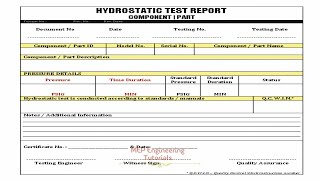
Chilled-water and refrigerant pipework: testing and flushing
by MEP Engineering Tutorials

Plumbing and drainage inspection and testing
by London Trade College
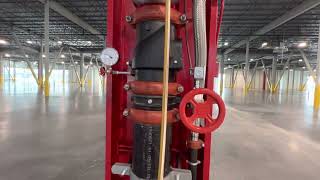
Fire fighting and fire alarm installation checks
by Sprinkler Fitting Canada
Lesson frames belong to the creators named in the Credits and are shown from YouTube.
What you learn
What you will be able to do
By the end you will be able to:
- Work from a quality plan, an ITP and approved submittals
- Raise WIRs and MIRs and read the approval codes
- Judge duct leakage, pressure and drainage tests against the specification
- Check fire systems, cables and boards and run insulation and earth tests
- Build snag lists and write NCRs that get closed
How it works
How this course works
Watch the lessons
Short video lessons, one module at a time, at your own pace.
Read the notes
Open the Reading tab for the written notes and diagrams of the module.
Check yourself
Answer the questions to see what stuck before you move on.
Final assessment
Pass the final once you have been through the modules.
Certificate, if you want oneOptional
Optional, with a page anyone can use to verify it.
Syllabus
Course content, module by module
In order, at whatever pace suits you. Each module ends with a practice task that builds on the last.
- Modules
- 9
- Optional videos
- 19
- Lessons and practice
- 2 hours
- Final questions
- 15
- 01
The MEP QA/QC engineer, quality plan, ITPs, WIR and MIR
3 optional videos · 27m - 02
Material receiving inspection
1 optional video · 2m - 03
HVAC ductwork inspection and duct leakage testing
2 optional videos · 19m - 04
Chilled-water and refrigerant pipework: testing and flushing
3 optional videos · 30m - 05
Plumbing and drainage inspection and testing
1 optional video · 10m - 06
Fire fighting and fire alarm installation checks
3 optional videos · 11m - 07
Electrical installation checks: containment, cables, boards and tests
3 optional videos · 17m - 08
Testing and commissioning witness, snag lists, NCRs and handover
3 optional videos · 23m Final assessment · 15 questions, pass mark 60%
Project
The course project
Optional practice that ends in the kind of job the course prepares you for, with the documents that go with it.
About 5 hours
MEP QC pack for a six-floor office fit-out: ITP register, test records, snag list and NCRs
Act as the contractor's MEP QA/QC engineer for a six-floor office fit-out. Build the ITP register, judge duct leakage, chilled-water, drainage and electrical test records, decide whether a floor is ready for handover, and raise the NCRs that follow.
- 5documents in the pack
- 7steps to follow
- 6things to hand in
- 5 hof work, at your pace
Sample document pack, 5 documents, filled in for the scenario
- PlanITP register extract, MEP package, Harbour Point fit-out
- Test reportDuct leakage test record format (training example), section D0
- Test reportHydrostatic test record format (training example), riser R0
- RegisterInsulation resistance and loop impedance record format (training example), board DB-0
- Punch listSnag list format (training example), floor 0
Read inside the course and download as a workbook. The project is optional practice, marked when you submit it; the certificate needs only the modules and the final assessment.
Tools
Software, hardware and lessons
Software
A spreadsheet (LibreOffice Calc is free) for the ITP, the WIR and MIR logs, the test records, the snag list and the NCR log. Nothing else is needed.
Hardware
None. If you can borrow a pressure gauge, a multimeter or an insulation tester at work, the practice tasks are better for it, but every task can be done on paper.
Who it is for
Beginner to intermediate. For mechanical and electrical diploma and degree graduates, site engineers, supervisors and technicians moving into MEP QA/QC. You should know what a duct, a pipe and a distribution board are; no inspection experience is needed.
Video lessons by
- QualityEngineers Guide
- HardHat Engineer
- Civil Engineer At Site.
- Quality Control with Frans
- Insight Control System
- MrALRamadhan
- MEP Engineering Tutorials
- EXPLORING PIPING
- HVAC School
- London Trade College
- Electronics & Electromech Solutions
- Flameguard Fire Protection Philippines
- RectorSeal
- IIQA
- Fluke Corporation
- Megger US
- ICxA
Independent creators, credited in full under Credits.
Software you need
What to download, where from, what it costs and how to install it. Every link goes to the maker's own site, never a mirror.
Nothing to install
A spreadsheet is enough for the ITP, the WIR and MIR logs, the test records, the snag list and the NCR log. If you can borrow a pressure gauge, a multimeter or an insulation tester at work, the practice is better for it, but every task can be done on paper.
Optional
Useful, not needed to finish the course.
- 01Free
LibreOffice
The Document Foundation
- Runs on
- Windows 10 or 11, macOS 11 or newer (Intel or Apple silicon), Linux
- Account
- None needed
- Size
- up to 1.5 GB of disk space on Windows
LibreOffice is free, open-source software under the Mozilla Public License 2.0, for any use including business. Calc is its spreadsheet.
Steps
- 1.Open the LibreOffice download page.
- 2.Check the page has picked your operating system, then select Download.
- 3.Run the installer (administrator rights are needed on Windows).
- 4.Start LibreOffice Calc for spreadsheet work.
- 5.Save as .xlsx if you need to share files with Excel users.
- Choose the latest main version unless your organisation asks for the older, more conservative release.
Official download pagelibreoffice.org
Checked against each maker's own page on 27 September 2026. Trial lengths and editions change; the maker's page is the final word.
What you walk away with
Your certificate for MEP QA/QC Engineer: HVAC, Plumbing, Fire and Electrical Site Inspection
Finish the course, pass the final, and this is the document with your name on it.

Verifiable by anyone
Adds to LinkedIn in one click
QR code on the certificate
Names what you can do
A permanent link
Earned, not attended
Learning is free. The certificate is optional.
Add it now and pay only when you have finished the course, or come back for it later. One-off, US$26.49, with a receipt.
Issued by Wartens Ltd (England and Wales, company no. 15262249) through the EDWartens training portal, as a Certificate of Completion for this self-paced course. Sold in India by Wartens Automation Private Limited. It is not a vendor certification, a university award or a CPD-accredited activity, and it does not certify competence on live equipment. Delivered electronically; see the refund policy.
Why learn with EDWartens
What you get with this course.
- Free from the first lesson to the final assessment.
- Video lessons with written notes and a project.
- An optional certificate that anyone can verify online.
FAQ
Common questions
Who is this MEP QA/QC course for?
It is for mechanical and electrical diploma and degree graduates, site engineers, supervisors and technicians who want to move into MEP QA/QC on building projects in the Gulf, the UK and elsewhere. You should know what a duct, a pipe and a distribution board are. No inspection experience is needed.
Is the course free to learn?
Yes. Every module, the notes, the worked problems, the project and the final assessment are free. The only software you need is a free spreadsheet. The certificate is optional.
Which standards does it use?
It teaches the ideas of the main references in its own words. Examples are SMACNA and BS EN 1507 or 12237 for duct leakage, BSRIA and CIBSE guidance for flushing and commissioning, NFPA 13, 20 and 72 and BS EN 12845 and BS 5839-1 for fire systems, and BS 7671 for electrical tests. Your project specification always governs.
Is this a certification from an inspection or engineering body?
No. It covers much of the knowledge an MEP QA/QC engineer needs, but it is not a certification scheme and does not replace site experience or an employer's own approval. You get an EDWartens Certificate of Completion.
What certificate does the MEP QA/QC Engineer course give?
An EDWartens Certificate of Completion, issued when you finish the modules and pass the 15-question final at 60 percent. It has a number anyone can verify on our site. It is not an official engineer or inspector grade.
Does it teach me to run the tests myself?
It teaches what a correct test looks like, so you can witness it and judge the record. Pressure testing, live electrical testing and fire pump testing need training, equipment and authorisation on your site, which this course does not replace.
How long does the MEP QA/QC Engineer course take?
The lessons and practice take about 2 hours. The video is optional: about 2.5 more hours if you watch all of it. The optional project takes about 5 hours more.
What is the project in the MEP QA/QC Engineer course?
You act as the MEP QA/QC engineer for a six-floor office fit-out. You build the ITP register. You judge duct, chilled-water and drainage tests. You check an electrical test record, then write a snag list and NCRs.
Is the MEP QA/QC Engineer course free in India, and what does the certificate cost?
Yes. Learning costs ₹0 in India: every module, the written notes, the practice tasks and the final assessment, with no card and no trial period. The only paid item is the optional EDWartens Certificate of Completion, ₹959 including GST for this beginner course, paid in rupees through Razorpay, and only if you want it after passing the final assessment.
What topics does the MEP QA/QC Engineer course cover, module by module?
The MEP QA/QC Engineer course has 9 modules. It opens with "The MEP QA/QC engineer, quality plan, ITPs, WIR and MIR", goes through "Material receiving inspection", "Chilled-water and refrigerant pipework: testing and flushing", "Fire fighting and fire alarm installation checks" and "Testing and commissioning witness, snag lists, NCRs and handover" and ends with "Final Assessment". The full list with minutes is under "What you learn" on this page.
What can I do after the MEP QA/QC Engineer course?
After the MEP QA/QC Engineer course: Say what an MEP QA/QC engineer checks, which documents control the work and what the role may not decide; Follow the chain from submittal to ITP to WIR and MIR, and read the approval code that comes back; Inspect incoming material against the approved submittal and decide to accept, quarantine or reject. These are the practical outcomes the course is written around, and the final assessment of 15 questions checks them.
What software and hardware do I need for the MEP QA/QC Engineer course, and does it cost anything?
For the MEP QA/QC Engineer course, software: A spreadsheet (LibreOffice Calc is free) for the ITP, the WIR and MIR logs, the test records, the snag list and the NCR log. Nothing else is needed. Hardware: none. If you can borrow a pressure gauge, a multimeter or an insulation tester at work, the practice tasks are better for it, but every task can be done on paper. The course itself is free.
Is the MEP QA/QC Engineer course suitable for me, and what level is it?
MEP QA/QC Engineer is rated beginner. Beginner to intermediate. For mechanical and electrical diploma and degree graduates, site engineers, supervisors and technicians moving into MEP QA/QC. You should know what a duct, a pipe and a distribution board are; no inspection experience is needed. It is written for mechanical and electrical diploma and degree graduates, site engineers, supervisors and technicians moving into MEP QA/QC on building projects, and takes about 2 hours of lessons and practice, plus about 2.5 hours of optional video, at your own pace.
Which jobs use the skills from the MEP QA/QC Engineer course?
Skills from the MEP QA/QC Engineer course (for example: say what an MEP QA/QC engineer checks, which documents control the work and what the role may not decide) are used in MEP QA/QC engineer work. The course gives you practical evidence of the skill; it does not promise a job, and employers decide on experience and interview.
All course factsHide course facts
- Price
- ₹0, free for good. No trial, no card. Comparable classroom training of this length costs about ₹1,999.
- Who it is for
- Mechanical and electrical diploma and degree graduates, site engineers, supervisors and technicians moving into MEP QA/QC on building projects
- Format
- 9 self-paced modules, about 2 hours of lessons and practice, plus about 2.5 hours of optional video, written notes, a practice task per module and one final assessment.
- Level
- Beginner. Beginner to intermediate. For mechanical and electrical diploma and degree graduates, site engineers, supervisors and technicians moving into MEP QA/QC. You should know what a duct, a pipe and a distribution board are; no inspection experience is needed.
- Brand
- Vendor-neutral
- Software
- A spreadsheet (LibreOffice Calc is free) for the ITP, the WIR and MIR logs, the test records, the snag list and the NCR log. Nothing else is needed.
- Hardware
- None. If you can borrow a pressure gauge, a multimeter or an insulation tester at work, the practice tasks are better for it, but every task can be done on paper.
- Certificate
- Optional EDWartens Certificate of Completion, ₹959 inclusive of GST for learners in India, verifiable by code. Not a vendor credential.
- Video lessons by
- QualityEngineers Guide, HardHat Engineer, Civil Engineer At Site., Quality Control with Frans, Insight Control System, MrALRamadhan, MEP Engineering Tutorials, EXPLORING PIPING, HVAC School, London Trade College, Electronics & Electromech Solutions, Flameguard Fire Protection Philippines, RectorSeal, IIQA, Fluke Corporation, Megger US, ICxA (independent creators, credited below)
- Language
- English
- Last updated
- 28 November 2026
Pairs well with
 PLC programming · FreeSiemens TIA Portal
 PLC programming · FreeSiemens TIA Portal in Three Hours
 PLC programming · FreeTIA Portal: Build a Machine
 Instrumentation · FreeInstrumentation for PLC Engineers
More free courses: Free Six Sigma and quality courses
Classroom course, Bangalore
PLC training in Bangalore
The Automation Engineer Program (AEP) is our classroom course in PLC programming and industrial automation, taught in person at our Electronic City centre.
Credits
Who made the video lessons
The video lessons in this course were created by the people below, not by EDWartens. Every lesson streams from its creator's own YouTube channel; EDWartens neither hosts nor sells that footage, and the creators are not affiliated with EDWartens and do not endorse this course. What EDWartens wrote is the study plan, the notes, the practice tasks and the assessments.
- QualityEngineers Guidewhat a QA/QC engineer does on site, and the nonconformance report and its purpose
- HardHat Engineerwhat an inspection and test plan is and how hold and witness points work
- Civil Engineer At Site.how a work inspection request is raised and what is attached
- Quality Control with Franswhy delivered material must match the approved submittal, and what MEP clearance means before ceilings close
- Insight Control SystemHVAC duct installation methods and accessories
- MrALRamadhana practical duct air leakage test with the calculation
- MEP Engineering Tutorialsa method statement for the hydrostatic pressure test of chilled-water pipework
- EXPLORING PIPINGchilled-water flushing before commissioning
- HVAC Schoola nitrogen pressure test of refrigerant pipework
- London Trade Collegeair testing above-ground drainage
- Sprinkler Fitting Canadaa sprinkler system hydrostatic test
- Flameguard Fire Protection Philippineshow a fire pump churn test is done
- RectorSealproper and improper firestopping side by side
- IIQAcable tray installation and an inspection checklist
- Fluke Corporationmeasuring insulation resistance step by step
- Megger USthe fall-of-potential earth electrode test
- ICxAthe fundamentals of the commissioning process
If you are one of these creators and would like a lesson removed or credited differently, write to info@edwartens.co.in.